Home
Selecting a Friction Coefficient Tester requires more than comparing prices or display screens. The instrument must match the material, test method, and production risk. ASTM D1894 and ISO 8295 provide widely recognized procedures for measuring static and kinetic friction in plastic films and sheets. These standards define important variables, including sled mass, test speed, contact area, and conditioning. Ignoring one variable can change the result.
Industry data reinforces the need for disciplined testing. Smithers’ “The Future of Global Flexible Packaging to 2028” identifies continued growth in flexible packaging applications worldwide. More films, coatings, and multilayer structures create tighter demands for controlled sliding performance. A pouch may move smoothly on a packaging line yet block during storage. A label can pass laboratory testing but wrinkle around a damp bottle. These failures often begin with small testing differences.
Look closely at calibration records, load-cell accuracy, travel speed, software traceability, and environmental control. Ask whether the tester supports the exact film thickness and surface combination used in production. Check repeatability with certified reference materials, not only with one convenient sample. Strong suppliers should explain uncertainty, maintenance intervals, and method validation. They should also provide application experience, not vague claims.
A perfect reading is not always a reliable reading. Operator alignment, dust, humidity, and sample conditioning can quietly distort results. The best Friction Coefficient Tester supports repeatable decisions across the laboratory and factory floor. Choose the system that exposes variation clearly, even when the result challenges an attractive specification. That humility improves packaging quality.
How to Choose a Friction Coefficient Tester?
Define the Friction Coefficient Tester and Its Measurement Principles
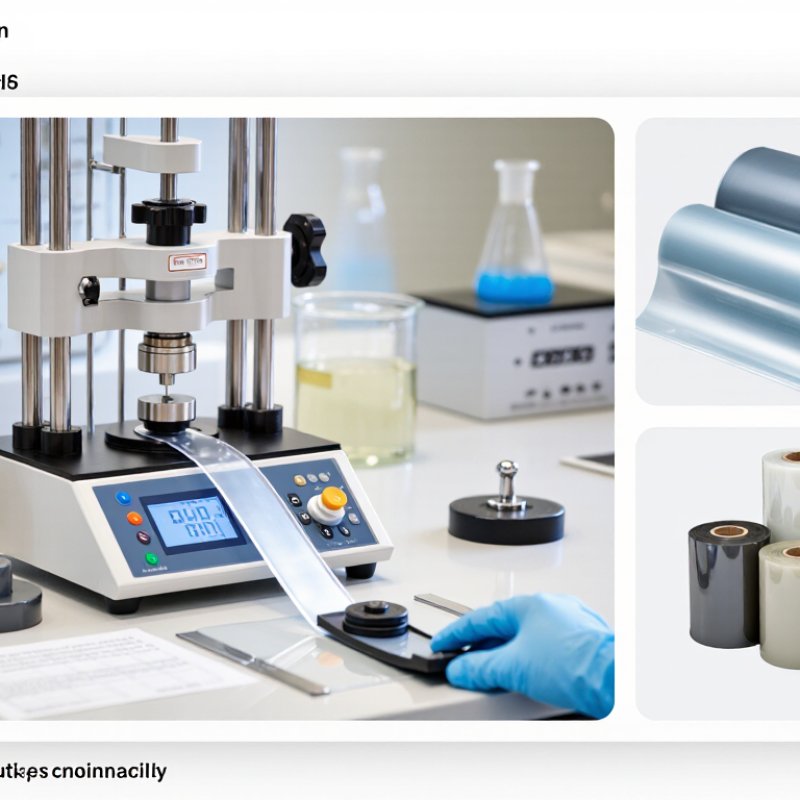
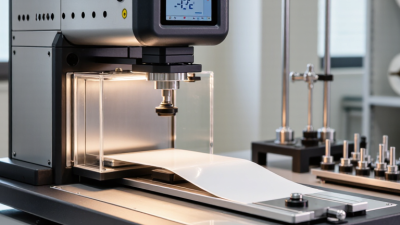
A friction coefficient tester measures resistance between two contacting surfaces. It reports static and kinetic coefficients of friction. Static friction records the force needed to start movement. Kinetic friction records resistance during sliding. The basic calculation is μ = F/N, where F is friction force and N is the applied normal force. A motor pulls a sled across a specimen at controlled speed. A load cell records force continuously.
Small details matter. Surface dust can change the result. Humidity can soften a film. A tilted sample can create false readings. ASTM D1894 and ISO 8295 provide commonly used procedures for plastic films and sheeting. Their guidance covers specimen preparation, sled loading, speed, and conditioning. Yet standards do not remove every source of uncertainty. Operator handling still matters.
The market context is significant. Grand View Research valued the global flexible packaging market at about USD 268.56 billion in 2023. Even a small friction error can affect packaging-machine feeding, stacking, and opening performance. Choose a tester with stable speed control, calibrated force measurement, and adjustable sled loads. Check its data export and environmental-control options. For thin films, a heavy sled may crush the surface. For textured materials, one test is rarely enough. Repeat measurements across machine and transverse directions. The result may look precise, but the method could still be incomplete.
| Evaluation Dimension | Definition and Measurement Principle | Typical Technical Data or Reference Requirement | Selection Guidance |
|---|---|---|---|
| Instrument Function | A friction coefficient tester measures the resistance between two surfaces when one surface moves relative to the other. The instrument calculates the coefficient of friction from the measured friction force and applied normal force. | Coefficient of friction: μ = Ff / Fn Ff = friction force; Fn = normal force. | Choose a tester that can measure both the material pair and the friction condition relevant to the intended application. |
| Friction Type | Static friction is the resistance that must be overcome to initiate motion. Kinetic friction is the resistance measured while the surfaces are sliding. |
Static coefficient: peak value before sliding. Kinetic coefficient: average or stabilized value during sliding. |
Select a system capable of recording the initial peak and the sliding-force curve when packaging opening, film handling, or slip behavior is important. |
| Common Test Standard | Standardized procedures define the specimen configuration, sled or probe, load, speed, conditioning, and calculation method. |
ASTM D1894: static and kinetic coefficients of friction for plastic film and sheeting. ISO 8295: friction coefficient measurement for plastic film and sheeting. |
Choose a tester whose fixtures, software, and reporting format can reproduce the required standard without undocumented modifications. |
| Normal Load | A defined normal force presses the contacting surfaces together. The friction force is interpreted in relation to this force. | Standard film tests commonly use a sled mass of approximately 200 g, equivalent to a normal force of about 1.96 N under standard gravity. | The tester should support the required load and allow the load to be changed or verified with a calibrated force-measurement system. |
| Sliding Speed | Friction can change with sliding speed because of viscoelastic behavior, surface transfer, temperature rise, and lubrication effects. | Film and sheeting methods commonly specify a controlled speed near 150 mm/min; the applicable standard and material specification take priority. | Select a motor with stable, programmable speed control and low vibration, especially when comparing low-friction films. |
| Measurement Range | The force sensor must measure the expected friction force without overload while maintaining adequate resolution for small changes. | For many dry polymer-film tests, reported coefficients commonly fall below 1.0, but the actual value depends on surface texture, additives, humidity, load, and counterface. | Choose a force range that covers the maximum expected friction force while preserving useful sensitivity near the target value. |
| Specimen Configuration | One specimen is typically fixed to the test table while a second specimen is attached to a sled or moving fixture. | ASTM D1894 and ISO 8295 use controlled contact between film or sheet surfaces. Specimen dimensions, alignment, and contact area must follow the selected method. | Verify that the tester accepts the required specimen thickness, width, length, sled geometry, and contact materials. |
| Surface and Counterface | The measured result represents the specific interface, not only the test material. Roughness, cleanliness, coatings, and counterface material can change friction. | The contact pair should be identified and kept consistent. Common factors include polymer-to-polymer contact, polymer-to-metal contact, surface treatment, and contamination. | Choose replaceable or clearly specified contact surfaces and establish a cleaning and inspection procedure before testing. |
| Environmental Control | Temperature and relative humidity can affect polymer flexibility, surface moisture, static charge, and additive migration. | A frequently used conditioning environment for plastics testing is approximately 23 °C and 50% relative humidity, unless the applicable standard specifies otherwise. | Use environmental conditioning or a controlled chamber when results must be compared across laboratories or production lots. |
| Data Acquisition | The instrument records friction force as a function of displacement or time and calculates static and kinetic coefficients. | Required outputs may include peak friction force, average sliding force, static coefficient, kinetic coefficient, test speed, normal load, and test distance. | Select software that displays the force curve, identifies the calculation zones, stores raw data, and exports results in a traceable format. |
| Repeatability and Calibration | Repeatability describes variation under the same conditions. Calibration verifies the accuracy of force, displacement, speed, and load measurements. | Calibration should use traceable reference equipment and be performed at defined intervals or after maintenance, overload, or relocation. | Prefer a tester with documented calibration procedures, overload protection, level adjustment, and repeat-test statistics. |
| Best-Fit Applications | Friction testing supports material development, packaging-machine setup, quality control, print or coating evaluation, and troubleshooting of feeding or stacking problems. | Typical test materials include plastic films, sheets, coated papers, laminates, foils, rubber-like surfaces, and other flat flexible materials. | For routine quality control, prioritize simple standardized operation. For research, prioritize adjustable load, speed, environment, fixtures, and raw-data access. |
How to Choose a Friction Coefficient Tester?
Choosing a friction coefficient tester starts with identifying the material. Plastic films, paper, rubber, coatings, and flooring do not behave alike. A thin film may need a light sled and controlled speed. A rubber surface may require higher force capacity and stronger specimen restraint. ASTM D1894 and ISO 8295 commonly use a 200 g sled for plastic film testing. ISO 8295 also specifies a test speed of 100 mm/min, helping laboratories compare results more consistently.
Surface condition matters just as much. Record roughness, coating direction, contamination, moisture, and temperature before testing. Packaging films often show different results on the treated and untreated sides. Paper can change noticeably with humidity. ISO 15359 addresses static and kinetic friction for paper and board, while flooring methods may require a horizontal pull or slip-based setup. A tester should match the intended standard, contact geometry, load range, and movement speed.
Test requirements decide the final configuration. Select equipment with calibrated force measurement, adjustable sled loads, stable alignment, and repeatable data recording. An environmental chamber may be necessary for products used in cold, humid, or heated conditions. Do not trust one impressive reading. Ten repeated runs can expose drift, edge effects, or operator influence. That assumption can fail. In practice, a simple tester with correct fixtures may outperform a complex system used with the wrong surface preparation. Verify calibration regularly, and document every condition that could change the result.
Choosing a friction coefficient tester starts with the material and test question, not the instrument’s appearance. A horizontal sled tester measures static and kinetic friction under controlled load and speed. It suits films, paper, labels, and coated surfaces. An inclined-plane tester is simpler and useful for slip-angle checks, but it offers less control over motion. Rotational testers can examine friction during continuous contact, especially for molded parts or lubricated surfaces.
Look for a calibrated load cell, adjustable travel speed, stable sample fixtures, and automatic data recording. Temperature and humidity control matter when testing packaging films or rubber-like materials. The measurement method must match real use. A package sliding across a conveyor needs different conditions from a seal opening by hand. Record normal force, sliding distance, surface preparation, and conditioning time. Small changes in cleaning can shift the result.
In practice, repeatability is often harder than expected. I once focused too much on software and overlooked sample alignment. That was a mistake. Ask whether the tester reports static friction, kinetic friction, or both. Check its calibration process and uncertainty data before purchase. A clear test standard improves comparison, but it cannot remove every source of variation. Use several specimens, inspect worn surfaces, and question unusually low readings. Cheap testing can become expensive when poor data guides production decisions.
A friction coefficient tester should be judged by more than its displayed number. Accuracy depends on load control, sled geometry, travel speed, and surface alignment. Ask whether the instrument supports the testing standard required for your material. Common references include ASTM D1894 and ISO 8295, but their conditions are not identical.
Check the tester’s measurement range before purchasing. A narrow range may improve resolution, while an oversized load cell can hide small changes. Calibration should cover force, distance, and speed. Request calibration records with traceable references, not only a certificate with a date. A practical check uses a clean reference film under controlled temperature and humidity. Record the room conditions beside every result.
Small details matter. Dust can change the reading. So can a worn sled edge. I have seen stable equipment produce scattered results after operators used different cleaning methods. Define sample conditioning, contact time, cutting direction, and replicate numbers. The software should preserve raw readings, not only averages. Review the force curve for spikes, drift, or unusual starting resistance. A smooth curve is not always a correct curve. Operator notes can expose problems that statistics miss. Data reliability improves when results remain linked to sample identity, test settings, calibration status, and the person who performed the test. Some laboratories still overlook this documentation. That weakness deserves attention.
Selecting a friction coefficient tester starts with the material and test purpose. Flexible films often require static and kinetic measurements under controlled speed. Paper, textiles, rubber, and coated surfaces may need different sled loads or contact areas. Check whether the instrument supports your required method, sample size, temperature, and humidity range. Small details matter.
Budget should include more than the purchase price. Consider calibration, replacement sleds, software updates, training, and annual maintenance. A low-cost tester may appear attractive, but limited resolution can weaken valuable test results.
In practical laboratory work, I have seen operators overlook sample conditioning. That mistake can create inconsistent readings, even with a capable instrument. Test repeatability deserves attention.
Support can strongly influence daily productivity. Ask whether technicians provide installation guidance, method development, troubleshooting, and calibration records. Response time matters when a production decision depends on one result. Request sample reports and verify the measurement range before ordering. Independent verification is useful, although it can slow the selection process. Reliable suppliers should explain limitations instead of promising universal performance. Choose a tester that fits your application today, but leave room for new materials and stricter quality requirements.