What is the Best Temperature and Humidity Test Chamber for Your Needs?
Selecting the right Temperature and Humidity Test Chamber is crucial for various industries. These chambers simulate environmental conditions to ensure products can withstand extreme temperature and humidity. Understanding your specific needs helps in making the best choice.
There are different types of test chambers available. Some are designed for basic testing, while others offer advanced features. Consider the range of temperatures and humidity levels you require. Does your product need to endure high humidity or freezing temperatures? Identifying these factors is essential.
Not all chambers are created equal. Researching reliable manufacturers is vital. Look for those with strong reputations and positive reviews. Also, think about the size and capacity of the chamber. Balancing your budget with your requirements is often a challenge. Testing your product's durability requires a thoughtful approach.
Understanding the Importance of Temperature and Humidity Test Chambers
Temperature and humidity test chambers play a crucial role in various industries, especially in product development and reliability testing. According to a report from ASTM International, accurate testing environments can reduce failure rates by over 30%. This statistic highlights the essential need for precise control of these environmental factors.
Understanding how temperature and humidity affect material properties is vital for engineers. Many materials expand or contract with temperature changes. Similarly, humidity can influence corrosion rates and electronic performance. The International Electrotechnical Commission studies indicate that products exposed to fluctuating humidity levels are 50% more likely to fail prematurely. Effective testing ensures these conditions are simulated accurately.
However, selecting the right chamber may not be straightforward. Users must consider size, temperature range, and humidity control capabilities. Manufacturers often face challenges in achieving the desired balance between performance and cost. Some chambers may not maintain stable conditions as expected, leading to inconsistent test results. Regular calibration and monitoring are necessary to ensure reliability. Industry data stresses that up to 20% of companies neglect this maintenance element, impacting their testing outcomes.
Temperature and Humidity Test Chamber Performance Comparison
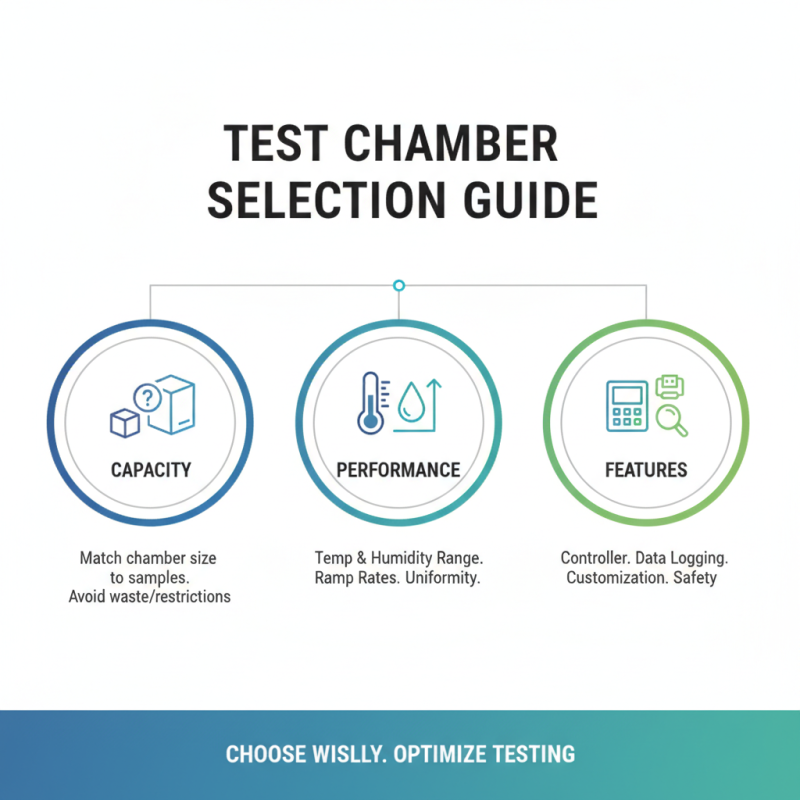
Key Factors to Consider When Choosing a Test Chamber
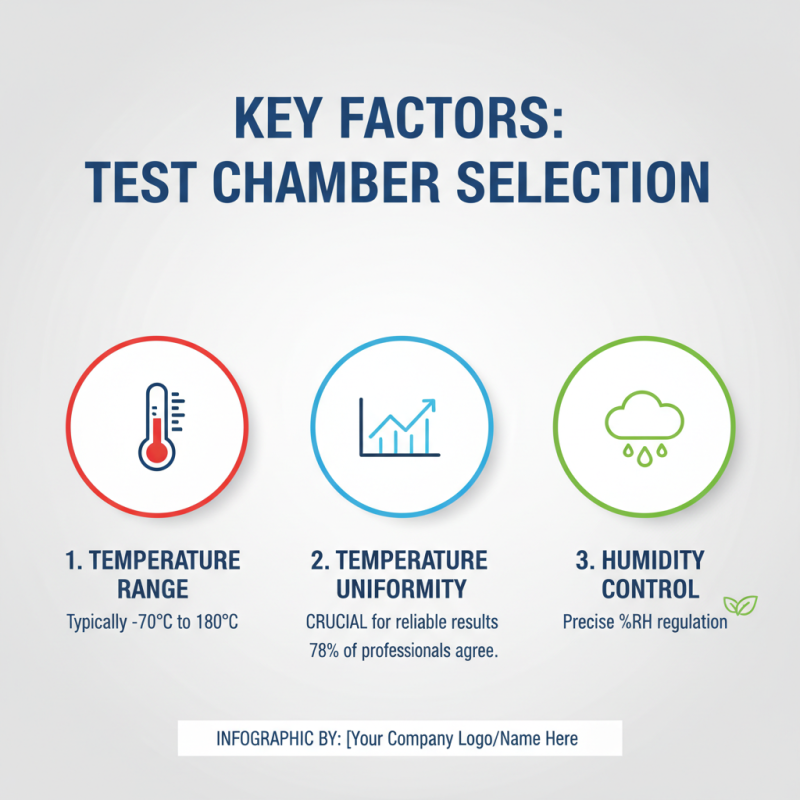
When selecting a temperature and humidity test chamber, several key factors require careful consideration. One crucial aspect is the temperature range. Many tests need precise control within a range of -70°C to 180°C. According to a recent industry report, 78% of professionals cited temperature uniformity as a major priority. Inconsistent temperature distribution can lead to unreliable results, rendering tests ineffective.
Another significant factor is humidity control. A chamber should effectively manage humidity levels, often between 10% to 98% relative humidity. A study revealed that 65% of users reported that humidity fluctuations affected their test outcomes. It's vital to assess how quickly the chamber can adjust humidity levels. Response times are critical for replicating real-world conditions.
Durability and maintenance also matter. Many chambers, designed with varying durability levels, can impact long-term reliability. A high-quality chamber should withstand continuous operation. Interestingly, 40% of users noted prolonged downtimes due to maintenance issues. Reflecting on these aspects can help ensure that you choose a suitable test chamber, ultimately improving your testing accuracy and efficiency.
Types of Temperature and Humidity Test Chambers Available
When choosing a temperature and humidity test chamber, understanding the types available is crucial. There are mainly two categories: walk-in and benchtop chambers. Walk-in chambers offer ample space for large items. They are ideal for automotive parts or large electronics. On the other hand, benchtop chambers save space and are suitable for smaller items. They typically accommodate testing at a bench height, making them accessible and practical.
Humidity levels are another factor to consider. Some chambers can control humidity precisely, facilitating more accurate tests. Others provide basic humidity control, which can suffice for general testing. It's essential to match your specific needs with the chamber's capabilities. You might find that the perfect chamber requires compromises. The balance between features and budget can be tricky, leading to potential oversights in selection.
Experimenting with different chambers can reveal unexpected challenges. For instance, a chamber might not maintain temperature consistently, affecting your results. Furthermore, maintenance of these chambers is crucial but often overlooked. Regular checks can prevent costly errors in experimentation. Thus, attention to detail is necessary for effective testing outcomes.
What is the Best Temperature and Humidity Test Chamber for Your Needs? - Types of Temperature and Humidity Test Chambers Available
| Chamber Type |
Temperature Range (°C) |
Humidity Range (%) |
Capacity (L) |
Applications |
| Standard Test Chamber |
-20 to 100 |
20 to 95 |
100 |
Material Testing |
| Walk-In Chamber |
-30 to 60 |
10 to 98 |
1000 |
Large Scale Testing |
| Benchtop Chamber |
-10 to 70 |
30 to 85 |
50 |
Laboratory Testing |
| Environmental Test Chamber |
-40 to 150 |
5 to 95 |
200 |
Product Durability Testing |
| Salt Spray Chamber |
25 to 50 |
N/A |
100 |
Corrosion Testing |
Maintenance and Calibration for Optimal Chamber Performance
Maintaining and calibrating your temperature and humidity test chamber is crucial for accurate results. Regular maintenance ensures optimal performance. Check seals and gaskets for wear. A damaged seal can cause errors in testing. Clean internal surfaces to avoid contamination. Dust can interfere with sensors and controls.
Calibration is equally important. An uncalibrated chamber can lead to unreliable data. Follow manufacturer guidelines for calibration frequency. Use certified standards to ensure accuracy. Keep a detailed log of calibration results. This not only improves reliability but also reflects accountability in your processes.
Regular audits of your chamber’s performance are essential. Sometimes, unexpected issues arise, like temperature fluctuations. Address these promptly to prevent data loss. Reflect on past calibration results. They can help identify trends and potential areas for improvement. A proactive approach leads to better reliability in your testing.





 Home
Home