• facebook
  • youtube
  • linkedin
Leave Your Message

Top 10 Textile Laboratory Testing Equipment for Global Buyers?

In the textile industry, quality control is paramount. This quality assurance process relies heavily on advanced Textile Laboratory Testing Equipment. According to a recent report by MarketsandMarkets, the global textile testing market is projected to reach $1.17 billion by 2026, reflecting a compound annual growth rate (CAGR) of 5.7%. The demand for precise and reliable testing tools is on the rise.

Textile Laboratory Testing Equipment plays a critical role in ensuring products meet industry standards. With growing consumer awareness, businesses face pressure to uphold quality. Inadequate testing can lead to significant financial losses and reputational damage. For instance, a major recall can cost millions, not to mention the loss of consumer trust.

While the benefits of advanced testing equipment are clear, selecting the right tools remains challenging. Many manufacturers overlook essential factors, such as equipment calibration and maintenance. Balancing cost and efficiency is another hurdle. Thus, informed decisions are crucial for sustaining competitive advantages in the textile sector. Investing in the right equipment may require upfront costs, but the long-term benefits often outweigh these initial investments.

Top 10 Textile Laboratory Testing Equipment for Global Buyers?

Top Textile Laboratory Testing Equipment: An Overview

In the textile industry, accurate testing is crucial for quality assurance. Various laboratory testing equipment plays a significant role in achieving this goal. Industry reports indicate that the global textile testing market is projected to reach USD 5.5 billion by 2025, driven primarily by increased demand for high-quality textiles. As buyers look for reliable testing solutions, understanding the top equipment available becomes essential.

Common tools include tensile testing machines, color fastness testers, and gas chromatography systems. These devices ensure textiles meet safety standards and durability requirements. For instance, a tensile testing machine measures fabric strength and elongation. Accurate results can lead to improved product development and increased consumer trust. However, many labs struggle with calibration and data interpretation, emphasizing the need for ongoing staff training and equipment maintenance.

**Tip:** Regularly calibrate your equipment to ensure precision. This practice minimizes errors and enhances test reliability. Another key point is to keep abreast of industry standards and adapt testing processes to these guidelines. Failure to do so may lead to non-compliance and potential product recalls. Investing in employee training can help mitigate these risks.

Key Features of Essential Textile Testing Devices

Top 10 Textile Laboratory Testing Equipment for Global Buyers?

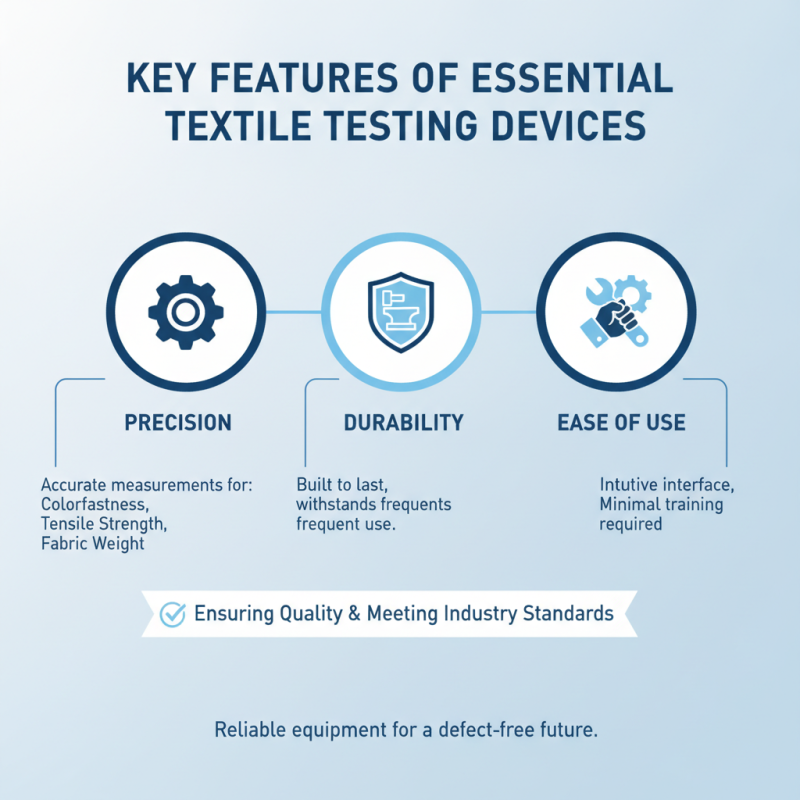
In the world of textiles, reliable testing equipment is crucial for quality assurance. Key features in textile testing devices include precision, durability, and ease of use. These factors ensure that materials meet established industry standards. Precision is vital. Testing instruments should offer accurate measurements for colorfastness, tensile strength, and fabric weight. This helps manufacturers avoid costly defects.

Durability is another essential aspect. Instruments must withstand frequent use in busy labs. Devices made with robust materials can endure wear and tear. This not only prolongs their lifespan but also ensures consistent performance over time. User-friendly interfaces are crucial too. A simple design allows operators to handle the equipment with minimal training, reducing the chance of errors during testing.

Lastly, reliable calibration is crucial for any testing device. Regular checks can reveal discrepancies that may occur over time. Even minor inaccuracies can lead to significant problems in production. Continued inspection fosters trust in the results. Choosing the right equipment is a challenge, and buyers must consider their specific needs. Understanding these features helps ensure a sound investment in quality testing.

Understanding the Applications of Textile Testing Instruments

Top 10 Textile Laboratory Testing Equipment for Global Buyers?

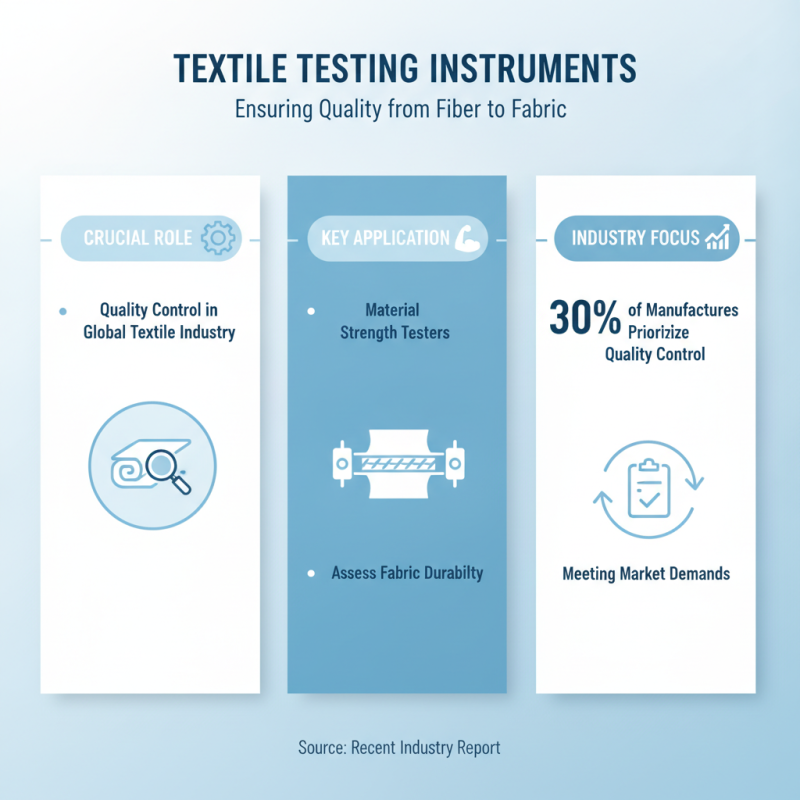
Textile testing instruments play a crucial role in ensuring quality across the global textile industry. For instance, material strength testers help assess the durability of fabrics. According to a recent report, around 30% of textile manufacturers consider quality control as their top priority. This underlines the importance of reliable testing processes in meeting market demands.

Moreover, the use of color fastness testers is on the rise. Studies show that consumers are increasingly aware of color retention and overall fabric quality. Approximately 25% of customer complaints in the textile sector relate to color fading. Therefore, ensuring color stability through rigorous testing is essential for brands aiming to maintain customer satisfaction.

Beyond quality assurance, these instruments assist in compliance with international standards. For example, testing for harmful substances in fabrics has gained significant attention. As regulations tighten, manufacturers must invest in modern testing technologies to avoid legal repercussions. Continuous improvements and innovations in textile testing are necessary to meet evolving industry standards while addressing sustainability concerns.

Criteria for Selecting Textile Laboratory Testing Equipment

When selecting textile laboratory testing equipment, precision and reliability are critical. According to industry reports, over 70% of textile quality issues arise from inadequate testing methods. Therefore, buyers must consider the accuracy of measurements and the equipment's ability to perform consistent tests.

One key criterion is calibration capability. Equipment that can be easily calibrated ensures that results remain reliable over time. This is particularly important for tests like colorfastness and strength testing, where even slight deviations can lead to significant quality fluctuations. It’s essential to regularly review calibration standards to stay compliant with industry benchmarks.

Tips: Always review the manufacturer's specifications. Checking for certifications can validate the equipment's accuracy levels. Also, consider your specific testing requirements. Certain equipment may excel in one type of test but fall short in another. Research indicates that tailored solutions lead to better outcomes.

Another crucial factor is data reporting capabilities. Modern textile testing equipment should not only capture data but also present it in an easily understandable format. Automated reporting saves time and reduces human error. Yet, some users still face challenges with integrating these systems into their operations. Continuous training and support from knowledgeable technicians can help overcome these hurdles.

Top 10 Textile Laboratory Testing Equipment

Future Trends in Textile Testing Technologies

The textile industry is evolving rapidly, driven by technological innovations. Future trends in textile testing technologies focus on automation and advanced data analytics. These advancements will enhance the accuracy and speed of testing processes. Automated systems will reduce human errors, allowing for consistent and reliable results.

Moreover, integration of artificial intelligence is emerging as a key factor. AI algorithms can analyze data from various tests, identifying patterns that manual processes might overlook. Incorporating machine learning could also predict the performance of textiles under various conditions. Such innovations may propel the industry towards more sustainable practices by reducing waste and improving resource management.

While these trends show great potential, challenges remain. Not all laboratories may have access to cutting-edge technologies. Additionally, ensuring that testing equipment meets international standards is crucial. As the industry progresses, it will be essential to balance innovation with regulatory compliance. The pursuit of excellence in textile testing will continue to shape the industry’s future.

Top 10 Textile Laboratory Testing Equipment for Global Buyers

Equipment Type Purpose Key Features Future Trends
Tensile Testing Machine Tests the tensile strength and elongation Digital display, programmable settings Integration with IoT for real-time data analysis
Color Fastness Tester Measures color durability against various conditions Multiple testing conditions, user-friendly interface Advanced software for detailed reporting
Fabric Abrasion Tester Determines fabric wear and tear resistance Automated testing cycles, durable build AI integration for predictive maintenance
Moisture Management Tester Tests moisture absorption and evaporation rates Compact design, fast results Real-time monitoring with cloud storage capabilities
Dimensional Stability Tester Evaluates changes in fabric dimensions Precise measurement tools, easy calibration Integration with CAD systems for design feedback
Air Permeability Tester Measures the airflow through the fabric Digital readout, adjustable pressure settings Monitoring via mobile applications
Flammability Tester Tests fabric for ignition and flame spread Automatic flame control, safety features Real-time compliance checks with standards
Water Repellency Tester Assesses fabric's resistance to water penetration Efficient testing methods, high accuracy Smart sensors for accuracy improvement
Yarn Strength Tester Measures the tensile strength of yarns User-friendly software, flexible configurations Data analytics capabilities for R&D
Thermal Comfort Tester Evaluates comfort level based on thermal properties Advanced sensors, automated reporting Integration with wearable technology