Home
China has become a major manufacturing base for geosynthetic testing equipment and laboratory instruments. Demand is rising with infrastructure, drainage, landfill, and coastal protection projects. Recent analyses from Grand View Research and MarketsandMarkets identify geotextiles as a growing segment within the global geosynthetics market. Their reports also highlight stronger demand for quality control, performance verification, and standardized testing.
A Geotextile Water Permeability Tester measures water flow through geotextile materials under controlled conditions. The result can influence drainage design, filter selection, and construction acceptance. ASTM D4491/D4491M and ISO 11058 provide important references for testing apparent opening behavior and water permeability. ISO 12958 also supports in-plane water flow evaluation. These standards matter because a small difference in pressure, specimen preparation, or clamping can change the final result.
Details matter.
Dr. Jorge G. Zornberg has stated, “Geosynthetics can provide solutions that are not possible with conventional materials.” That view also creates a responsibility: reliable equipment must support reliable engineering decisions. A strong Chinese supplier should therefore demonstrate calibration records, transparent technical specifications, repeatability data, and practical after-sales support. Stainless-steel contact surfaces, stable pressure control, and clear digital readings are useful features in daily laboratory work. Still, no instrument is perfect. Operator training, sample conditioning, and maintenance can affect accuracy. Buyers should compare documented performance rather than attractive product descriptions. This guide examines how to identify a dependable China Geotextile Water Permeability Tester supplier for professional testing environments.
A geotextile water permeability tester measures water flow through a fabric in the normal direction. ISO 11058 defines a controlled method for evaluating this hydraulic property without applying mechanical load. The test helps laboratories compare drainage, filtration, and separation materials under consistent conditions.
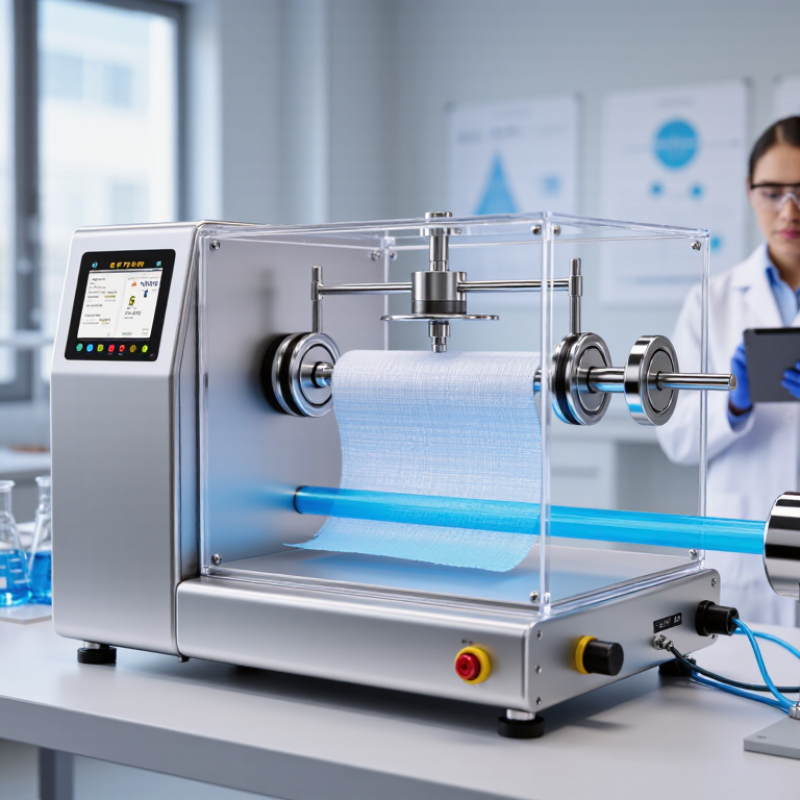
A typical tester includes a water reservoir, test cell, pressure control system, and flow measurement device. The operator places a conditioned specimen between sealed plates, removes trapped air, and applies the specified hydraulic head. Water then passes through the fabric while the instrument records flow and test conditions.
Even a small bubble can distort the result.
Accuracy depends on more than the instrument itself. The test cell must seal evenly, the water temperature should be monitored, and the measuring system requires regular calibration. Experienced technicians also inspect the specimen for wrinkles, damage, or uneven clamping. These details seem minor. They are not.
When selecting equipment from a supplier, request calibration records, operating instructions, replacement-part information, and evidence of ISO 11058 test capability. A digital display looks professional, but it cannot correct poor specimen preparation. In practice, laboratories may still obtain inconsistent data when operators rush the air-removal step or ignore temperature changes. That weakness deserves review.
ASTM D4491 and ISO 11058 measure how easily water passes through a geotextile in its normal direction. Both standards use a prepared specimen, controlled water flow, and a measured hydraulic head. The result helps engineers assess drainage performance in roads, railways, retaining walls, and landfill systems.
ASTM D4491 commonly determines permittivity using constant-head or falling-head procedures. The laboratory records the flow rate, specimen thickness, test area, and head loss. Permittivity is calculated from flow divided by area and hydraulic head. ISO 11058 also evaluates normal water permeability, usually under carefully controlled head conditions. It emphasizes specimen preparation, air removal, and stable flow readings.
Small details matter. A trapped air bubble can reduce measured flow. Uneven clamping may create an artificial leakage path. Water temperature also changes viscosity and can influence results. Testing technicians should condition specimens, check equipment seals, and repeat doubtful measurements. The comparison is not perfectly clean. Different heads, sample conditions, or reporting units can produce different values, even with similar geotextiles. A reliable laboratory report should identify the exact method, test direction, hydraulic conditions, number of specimens, and any deviations. One number is never the whole performance story. Interpreting it with soil gradation, installation stress, and long-term clogging risk is more defensible.
| Comparison Dimension | ASTM D4491 / D4491M | ISO 11058 |
|---|---|---|
| Standard Scope and Test Principle | ||
| Standard focus | Water permeability of geotextiles by determining water flow normal to the plane of the specimen. The standard is commonly used to calculate permittivity. | Water permeability characteristics normal to the plane of geotextile and geotextile-related products, generally tested without an applied normal load. |
| Flow direction | Perpendicular to the plane of the geotextile, also called normal-to-plane flow. | Perpendicular to the plane of the geotextile, also called normal-to-plane flow. |
| Basic measurement | Measures the volume of water passing through a known test area during a measured time interval under a controlled hydraulic head. | Measures the water flow rate through a known test area under a specified hydraulic head or hydraulic gradient. |
| Test Configuration | ||
| Typical specimen area | A circular specimen with an effective test area commonly around 200 cm² is used in laboratory permeability equipment, subject to the apparatus and applicable edition requirements. | The effective test area is defined by the test apparatus and shall be measured or controlled accurately. Many laboratory systems use an effective area close to 200 cm². |
| Specimen quantity | Multiple specimens are normally tested to obtain a representative average and assess variability. The exact number should follow the selected test procedure and project specification. | Multiple specimens are normally tested. The number of measurements should follow the standard edition, laboratory procedure, and project requirements. |
| Applied normal load | The standard test is generally performed without a compressive load unless a modified or project-specific procedure is specified. | The standard method is identified as testing without load. A separate loading arrangement may be required when evaluating in-service compression effects. |
| Water condition | Water should be sufficiently clean and free of air bubbles that could obstruct flow or affect the measured result. | Water should be sufficiently clean and deaerated or handled to minimize air entrapment, because trapped air can reduce the apparent permeability. |
| Hydraulic Test Methods | ||
| Constant-head method | Maintains a substantially constant water-head difference across the specimen and measures the steady water flow. A head difference of approximately 50 mm is commonly used in constant-head practice, subject to the applicable edition and procedure. | Maintains a specified water-head difference across the specimen and measures the resulting flow. A constant head of approximately 50 mm is commonly used, subject to the applicable edition and laboratory procedure. |
| Falling-head method | Suitable when the flow is too low for convenient constant-head measurement. The changing water level is recorded as the head decreases over time. | May be used for low-permeability materials when a falling-head arrangement provides more reliable measurement than a constant-head arrangement. |
| Hydraulic gradient | Calculated from the hydraulic head difference divided by specimen thickness: i = Δh / L | Calculated from the hydraulic head difference divided by specimen thickness: i = Δh / L |
| Calculations and Reported Results | ||
| Darcy flux or flow velocity | Water flow per unit area is calculated as: q = V / (A × t) where V is collected water volume, A is effective test area, and t is elapsed time. |
Water flow per unit area is calculated using the collected volume, effective test area, and elapsed time: q = V / (A × t) |
| Permittivity | Permittivity is calculated as: ψ = q / Δh It expresses the flow rate per unit area and per unit head difference. |
ISO 11058 primarily reports water permeability characteristics. If permittivity is required for comparison, it can be calculated from the measured flux and head difference using: ψ = q / Δh |
| Hydraulic conductivity | When required, the equivalent hydraulic conductivity can be calculated as: k = q / i where k is hydraulic conductivity and i is hydraulic gradient. |
Hydraulic conductivity can be calculated from the measured flow and hydraulic gradient: k = q / i, provided specimen thickness and test conditions are reported. |
| Common units | Permittivity: s−1 Water flux: m/s or L/(m²·s) Hydraulic conductivity: m/s |
Water permeability or flow velocity: m/s or L/(m²·s) Hydraulic conductivity, when calculated: m/s Permittivity, when calculated: s−1 |
| Useful conversion | 1 L/(m²·s) = 0.001 m/s = 1 mm/s. | 1 L/(m²·s) = 0.001 m/s = 1 mm/s. |
| Specimen Preparation and Result Quality | ||
| Wetting and saturation | The specimen should be thoroughly wetted before measurement. Air bubbles should be removed because they can block pores and produce artificially low results. | The specimen should be fully wetted and free from significant entrapped air before measurement. Saturation practice should be documented in the test report. |
| Specimen condition | Results are affected by thickness, mass per unit area, polymer type, manufacturing structure, wetting condition, and specimen handling. | Results are affected by product structure, thickness, wetting condition, temperature, hydraulic head, specimen handling, and the presence of geotextile-related components. |
| Temperature consideration | Water viscosity changes with temperature. Test temperature should be controlled or reported so that results from different laboratories can be compared appropriately. | Water temperature should be controlled or reported because viscosity directly influences the measured flow rate. |
| Typical reporting items | Standard designation and edition, specimen identification, effective test area, specimen thickness, test method, head difference, water temperature, individual results, average, and variability. | Standard designation and edition, product identification, specimen dimensions, effective test area, test method, head condition, water temperature, individual results, average, and variability. |
| Practical Selection Guide | ||
| Best suited for | Projects that specify ASTM-based permittivity or require comparison with North American geosynthetic test data. | Projects that specify ISO-based water permeability characteristics normal to the plane or require alignment with international test documentation. |
| Main advantage | Provides a widely recognized framework for measuring normal-to-plane water flow and reporting permittivity. | Provides an internationally recognized framework for measuring normal-to-plane water permeability using constant-head or falling-head arrangements. |
| Important comparison warning | ASTM and ISO results should not be treated as automatically interchangeable unless head condition, specimen area, loading, saturation, temperature, calculation method, and reporting units are equivalent. | ISO and ASTM results should be compared only after confirming that the test conditions, calculation basis, specimen preparation, and reporting units are equivalent. |
A reliable geotextile water permeability tester must cover a wide hydraulic range, from 10⁻⁶ to 10⁻² m/s. This range suits low-permeability composites and highly open drainage fabrics. The instrument should support both constant-head and falling-head methods. Method flexibility matters.
For practical laboratory work, select a system with adjustable hydraulic gradients and stable pressure control. A useful specification includes a specimen diameter of at least 50–100 mm, leak-resistant seals, and a calibrated flow sensor. Measurement resolution should remain suitable at the lowest target value. At 10⁻⁶ m/s, tiny leaks can distort results. Temperature measurement is also important because water viscosity changes with laboratory conditions. Automatic correction helps, but it should remain traceable and adjustable.
Testing should follow recognized procedures, such as ISO 11058 or ASTM D4491, while matching the selected test method to the fabric structure. A supplier in China should provide calibration records, uncertainty data, operating instructions, and replacement seals. Ask how the device was verified across the full range, not only at the middle point. Real testing is less tidy. Thick, compressible specimens may need controlled loading to prevent unrealistic pore changes. Even experienced users can overlook air bubbles. That mistake can produce a neat result, but not a trustworthy one.
The chart compares practical instrument specification bands for geotextile water-permeability testing. A full-range tester should cover four orders of magnitude, from 10⁻⁶ to 10⁻² m/s, while dedicated low-, mid-, and high-flow systems cover narrower operating windows.
Values are engineering coverage targets shown on a logarithmic scale. Actual operating limits depend on specimen thickness, hydraulic gradient, pressure control, sensor resolution, and the selected constant-head or falling-head test method.
Chinese geotextile water permeability tester suppliers face a demanding question: can pressure and flow remain within ±2% during testing? Accuracy is not created by software alone. It begins with stable pumps, calibrated pressure sensors, precise flow meters, and a rigid test chamber.
In practical production, reliable suppliers calibrate each sensor against traceable reference equipment. They should record calibration points across the full working range, not only at one convenient value. A pressure regulator helps reduce pump pulses. A small buffer tank can also steady the water supply. Temperature matters too. Water viscosity changes with temperature, affecting measured permeability. Good suppliers therefore monitor temperature and control it when required.
Details reveal manufacturing quality. Technicians should inspect seals, tubing, valves, and chamber surfaces before shipment. A tiny leak may distort flow readings. Each instrument needs repeated tests using reference materials or controlled flow conditions. Results should be documented and reviewed by trained engineers. Independent laboratory calibration can strengthen confidence, especially when testing supports research or quality certification.
No instrument stays perfect forever. Sensors drift. Operators make mistakes. Suppliers should admit these limits and provide maintenance guidance, verification procedures, and clear uncertainty information. Some suppliers may still rely too heavily on factory testing. That deserves reflection. A trustworthy manufacturer improves designs through field feedback, not only polished factory data.
China Top Geotextile Water Permeability Tester Supplier?
When comparing suppliers, calibration evidence deserves more attention than a polished product page. ASTM D4491/D4491M and ISO 11058 define important test principles for geotextile water flow. However, compliance depends on the complete method, not a logo alone. Ask for calibration records linked to national or international measurement standards. The report should show measured values, uncertainty, equipment identification, and the next calibration date. A certificate without uncertainty is incomplete.
Materials also influence long-term reliability. Stainless steel contact parts resist corrosion from water and soil extracts. Clear acrylic helps operators observe air bubbles, but it can scratch or age under strong cleaning chemicals. Seals should remain stable across repeated wetting cycles. Request the material specification. Do not accept “premium metal” as technical evidence. A 2024 geosynthetics market analysis forecast continued infrastructure demand, with global market growth above 5% annually. More testing volume may expose weak maintenance practices.
Supplier certification requires careful reading. ISO/IEC 17025 accreditation applies to a calibration laboratory’s competence, not automatically to the tester itself. Ask whether calibration is performed internally or by an accredited external laboratory. Review sample reports and recent service records. A practical factory audit should include flow-rate checks, leak testing, temperature monitoring, and operator training. Small details matter. I would also compare three repeated measurements, not one impressive result. Real purchasing decisions sometimes require more evidence than the brochure provides.