• facebook
  • youtube
  • linkedin
Leave Your Message

Top Air Permeability Testers for Global Buyers

Choosing the right Air Permeability Tester is not a simple matter of comparing prices. Global buyers need dependable readings, stable airflow, suitable test areas, and clear calibration records. A laboratory instrument may look impressive, yet perform poorly when samples are thick, coated, knitted, or highly porous.

Dr. Behnam Pourdeyhimi, a respected nonwovens researcher, has stated, “Performance must be measured where the product will be used.” That principle matters here. A tester for filtration media may require different airflow control from one used for apparel fabrics or industrial textiles. ASTM D737 and ISO 9237 are common reference methods, but method compatibility should never be assumed. Check it carefully.

Small details matter. A sealed specimen holder prevents leakage. A stable pressure regulator protects repeatability. Digital data export saves time during audits. Local service support can also prevent long production delays. No tester is perfect. Even experienced laboratories can overlook humidity, clamping pressure, or sample conditioning.

This guide reviews leading Air Permeability Tester options for international buyers. It considers measurement range, repeatability, standards support, software, maintenance, and supplier credibility. The strongest choice is not always the most expensive model. It is the one that matches the material, test method, workload, and team’s technical ability. Buyers should request demonstration data, calibration evidence, and application-specific references before making a final decision. A polished brochure helps, but real test results matter more.

Top Air Permeability Testers for Global Buyers

What Air Permeability Testers Measure and Why Testing Matters

Top Air Permeability Testers for Global Buyers

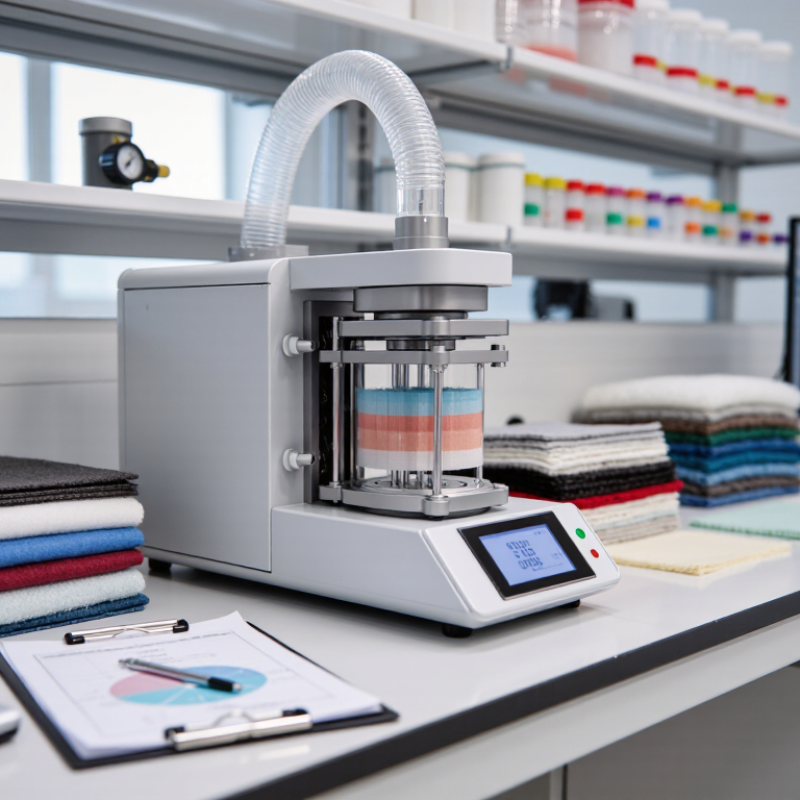
Air permeability testers measure how easily air passes through fabric, film, paper, or nonwoven material. The instrument applies a controlled pressure difference and records airflow through a defined test area. ISO 9237 commonly uses 100 Pa for clothing fabrics, while ASTM D737 often specifies 125 Pa. Results may appear as cubic feet per minute or litres per square metre per second.

The number matters during production. High permeability can improve breathability in sportswear, filtration support layers, and hygiene materials. Low permeability may protect against wind, dust, or unwanted air leakage. Textile Exchange’s 2024 Materials Market Report estimated global fibre production at 124 million tonnes in 2023, with polyester representing about 57%. This scale makes repeatable testing increasingly important, especially when recycled and virgin fibres behave differently.

A reliable tester needs stable pressure control, calibrated flow sensors, and suitable test heads. Operators should condition samples before testing, because humidity and fabric tension can change results. Small details matter. I have seen technically correct tests produce doubtful conclusions when the sample was folded or poorly clamped. That weakness deserves attention. Buyers should compare test pressure, aperture size, calibration records, and reporting units before selecting equipment. Results from different methods are not automatically comparable. ASTM International and ISO both stress controlled procedures, yet laboratories still need practical judgment. A clean number is helpful, but it is not always the whole truth.

Top Air Permeability Testers for Global Buyers - What Air Permeability Testers Measure and Why Testing Matters

Tester Category Primary Material What It Measures Common Test Pressure Typical Reported Unit Relevant International Method Why the Result Matters Important Selection Considerations
Textile air permeability tester Woven, knitted and nonwoven fabrics Airflow passing vertically through a defined area of fabric under a controlled pressure difference. 100 Pa is common under ISO 9237; 125 Pa is common under ASTM D737. Some technical textiles use higher pressures. mm/s, L/m²/s, or ft³/min/ft² ISO 9237; ASTM D737 Supports evaluation of breathability, comfort, drying behavior, filtration potential and process consistency. Check the available test area, pressure-control range, clamping seal and compatibility with thin, bulky or highly permeable fabrics.
Nonwoven and filtration-media tester Filter media, spunbond, meltblown and disposable filtration layers Airflow resistance or permeability through media used for filtration, ventilation and hygiene products. Often selected according to the material specification; pressure settings may range from low differential pressure to several hundred pascals. L/m²/s, m³/m²/s, or pressure drop in Pa ISO 9237, ASTM D737, and product-specific filtration procedures Helps balance filtration performance against breathing resistance, pressure loss and energy consumption. Verify whether the instrument reports constant-pressure flow, constant-flow pressure drop, or both; these are not interchangeable results.
Paper and board air-resistance tester Paper, tissue, packaging board and porous sheets Air resistance, air permeance or the time and pressure relationship for air passing through a paper specimen. Defined by the selected paper method and instrument configuration; pressure and flow conditions must be controlled consistently. Gurley seconds, μm/(Pa·s), or mL/min ISO 5636-3; TAPPI-style paper testing methods Important for printing quality, coating control, packaging behavior, tissue softness and uniformity of paper structure. Choose the method according to whether the specification requires air permeance, air resistance or Gurley-type time measurement.
Foam and porous-polymer tester Flexible polyurethane foam and other open-cell porous materials Airflow rate through foam under a specified pressure differential, commonly used to indicate openness of the cell structure. Frequently tested at a 125 Pa pressure differential, subject to the applicable method and material specification. L/min or m³/s ISO 7231; ASTM D3574, where applicable to flexible cellular materials Useful for confirming foam openness, cushioning behavior, acoustic performance and production uniformity. Control specimen thickness, compression, edge sealing and conditioning because these factors can significantly affect airflow results.
Garment and protective-clothing tester Rainwear, workwear, sportswear and protective clothing fabrics Air permeability of the textile layer that influences ventilation and wearer comfort. Commonly 100 Pa or 125 Pa, depending on the selected textile standard and product specification. mm/s or L/m²/s ISO 9237; ASTM D737 Provides an objective indicator of ventilation and helps compare fabric constructions, coatings and finishing treatments. Test both face and reverse sides when construction is directional; document conditioning temperature and relative humidity.
Geotextile and technical-fabric tester Geotextiles, agricultural textiles, building membranes and industrial fabrics Perpendicular or normal-to-plane water-free air permeability through a technical textile. Selected according to material thickness and specification; higher-pressure capability may be required for dense technical fabrics. mm/s, L/m²/s, or m³/m²/s ISO 9237 and project-specific technical-textile procedures Helps assess ventilation, drainage-related fabric structure, protective performance and batch-to-batch consistency. Use a robust clamp and sufficient pressure range; large test openings may be necessary for coarse or heterogeneous materials.
Acoustic-material airflow tester Fibrous absorbers, porous panels and acoustic foams Static airflow resistivity or airflow resistance, which describes how strongly a porous material opposes air movement. Method-dependent low-pressure airflow conditions; the pressure drop should remain within the specified linear measurement range. Pa·s/m or Pa·s/m² ISO 9053-1 and ISO 9053-2 Airflow resistivity is a key input for acoustic-material modeling and helps evaluate sound-absorption design consistency. Confirm specimen thickness, air direction, edge leakage control and whether the instrument supports steady-flow or alternating-flow measurement.
Laboratory research and quality-control tester Mixed porous materials and development samples Repeatable airflow or pressure-drop data across a configurable range of specimen areas and test conditions. Adjustable pressure control, commonly covering low-pressure textile tests and higher-resistance technical materials. Instrument-dependent; commonly mm/s, L/m²/s, m³/m²/s or Pa Configured to the applicable material standard and internal quality specification Supports method development, incoming inspection, process control, failure analysis and supplier comparison. Prioritize calibration traceability, automatic leak checks, data export, multiple test heads, repeatability and operator safety.
Key performance parameter All air-permeable materials Air permeability: the volume of air passing through a unit area per unit time at a specified pressure difference. Must be stated with the result because pressure affects measured airflow. Commonly mm/s or L/m²/s Defined by the selected test standard Allows meaningful comparison only when test area, pressure, specimen condition and air direction are equivalent. Never compare numerical results from different standards without checking pressure, units, test area and calculation method.
Quality and compliance parameter Finished products and production materials Repeatability, reproducibility, calibration status and conformity with a declared test method. Must remain stable throughout the test and be verified with calibrated pressure and flow references. Mean, standard deviation, coefficient of variation and pass/fail limit Applicable ISO, ASTM or customer specification Reliable testing reduces disputes, identifies process drift and provides defensible evidence for purchasing and compliance decisions. Request calibration records, uncertainty information, maintenance guidance and a documented method for conditioning and sampling.

Key Features to Compare When Choosing an Air Permeability Tester

Top Air Permeability Testers for Global Buyers

When choosing an air permeability tester, begin with the testing range. A narrow range may suit lightweight fabrics, but technical textiles need broader measurement capacity. Confirm the selected airflow method matches your material and applicable test standard. This prevents attractive specifications from becoming costly mismatches.

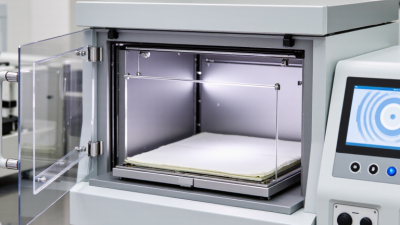
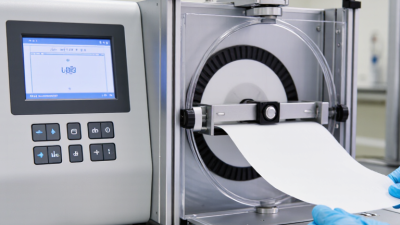
Pressure stability matters during every test. Look for precise sensors, adjustable pressure settings, and automatic leak checks. The sample clamp should apply even force without crushing soft materials. Ask whether different test heads are available for various specimen sizes. Small details matter here. A loose seal can distort results within seconds.

Repeatability is more useful than a single impressive reading. Request data from repeated tests using the same fabric lot. Review variation between operators, not only the average value. Calibration records, traceable reference materials, and clear software reports support reliable purchasing decisions. Check whether exported files include pressure, airflow, test area, and date. Global laboratories may also need multilingual interfaces and adaptable electrical specifications.

Ease of maintenance deserves attention. Dust around the test head can affect sealing and sensor performance. A tester with accessible filters and simple calibration procedures reduces downtime. However, automation is not a substitute for judgment. Operators still need suitable conditioning, stable temperature, and correctly prepared specimens. No instrument is perfect. Even experienced teams can overlook sample orientation or edge damage. A practical evaluation should include real production materials, not only clean demonstration samples.

Top Air Permeability Tester Types for Different Global Industries

Top Air Permeability Testers for Global Buyers

Different industries need different air permeability tester types. Textile mills often use constant-pressure testers for woven fabrics, knitted materials, and technical textiles. These instruments show airflow through fabric under a controlled pressure difference. Nonwoven producers may prefer automatic multi-range testers. They handle lightweight filters, hygiene materials, and dense industrial sheets with better sensitivity. Paper manufacturers commonly select Gurley-style or differential-pressure instruments. These testers help compare porosity, coating effects, and production consistency.

Filter manufacturers need high-flow systems with adjustable pressure control. Their tests may involve filtration media, ventilation materials, or cabin filters. Packaging companies often choose compact benchtop testers for paper bags, breathable films, and coated packaging. Portable units can support incoming inspections, but they may sacrifice repeatability. That trade-off deserves attention. No single tester fits every material.

Tips: Confirm the required test standard before purchasing. Check pressure range, airflow resolution, sample size, and calibration records. Condition samples for temperature and humidity, especially with textiles and paper. Ask whether the software stores raw data and operator details. This supports traceability during audits. Also, test several reference samples. A perfect reading from one sample can still hide a weak testing method. Need reliable evidence, not impressive numbers.

Top Air Permeability Tester Types for Different Global Industries

Typical differential pressure values specified by widely used air-permeability test methods. Values are method references and are not directly comparable across different specimen types, test areas, or instruments.

Textile and nonwoven testers commonly operate around 100–125 Pa, while paper and packaging applications may use higher pressure differentials. The appropriate tester type depends on the applicable international standard, material structure, and required airflow range.

Testing Standards, Accuracy, and Calibration Requirements

Top Air Permeability Testers for Global Buyers

A reliable air permeability tester must match the required testing standard, not just display a precise-looking number. ASTM D737 specifies a 125 Pa pressure differential for many textile tests, while ISO 9237 commonly uses 100 Pa for clothing fabrics. These values are not interchangeable. A buyer comparing suppliers should check pressure control, test-area size, airflow range, and automatic clamping. Small leaks around the specimen can distort results, especially with thin woven fabrics. The reading may look stable. The method may still be wrong.

Calibration deserves equal attention. ASTM D737’s published precision data highlight the effect of operator technique, specimen handling, and instrument condition. ISO 9237 also requires controlled pressure and suitable airflow measurement. Select equipment supported by traceable flow references and calibrated differential-pressure sensors. Calibration certificates should identify the reference standard, uncertainty, date, and adjustment history. ISO/IEC 17025 accreditation adds stronger confidence when a laboratory performs verification.

I have seen testing teams calibrate the flow channel but ignore the clamp seal. That shortcut is risky. Check zero readings before each batch, inspect gaskets, and run a reference fabric under fixed conditions. Record temperature, humidity, pressure, and specimen orientation. Global buyers should request raw data, repeatability results, and service procedures before purchasing. A useful tester is not merely fast; it makes errors visible.

How Global Buyers Can Select and Purchase the Right Tester

Top Air Permeability Testers for Global Buyers

Selecting an air permeability tester begins with the material, not the product brochure.

Woven fabric, nonwoven sheets, paper, and filtration media may require different test ranges and fixtures. Check the expected airflow, pressure range, specimen size, and measurement accuracy. A tester that performs well on light fabric may struggle with dense technical material. Small details matter.

Ask for calibration records, repeatability data, and evidence of testing against recognized methods such as ISO or ASTM procedures.

Confirm whether the instrument supports your required units and exports readable results. A clear display helps, but stable software matters more during repeated tests. Request a demonstration using a sample close to your own material. Sales data alone can mislead.

Think about purchasing conditions across borders.

Verify voltage, plug type, delivery terms, spare parts, training, and technical support in your region. Customs paperwork should match the equipment description and invoice. Do not ignore installation space; some testers need a dry, steady workbench. A cheaper unit may become expensive when filters, seals, or calibration services are unavailable. I have seen buyers focus too heavily on price and regret weak after-sales support. That judgment is understandable, but incomplete. Before ordering, compare the full ownership cost and record every assumption.