Home
Choosing the China Best Air Permeability Tester for global buyers requires more than comparing prices. The right instrument must produce repeatable results, support recognized test methods, and fit your daily laboratory workflow. For textile, filter, paper, and nonwoven manufacturers, air permeability affects product comfort, filtration performance, and process control.
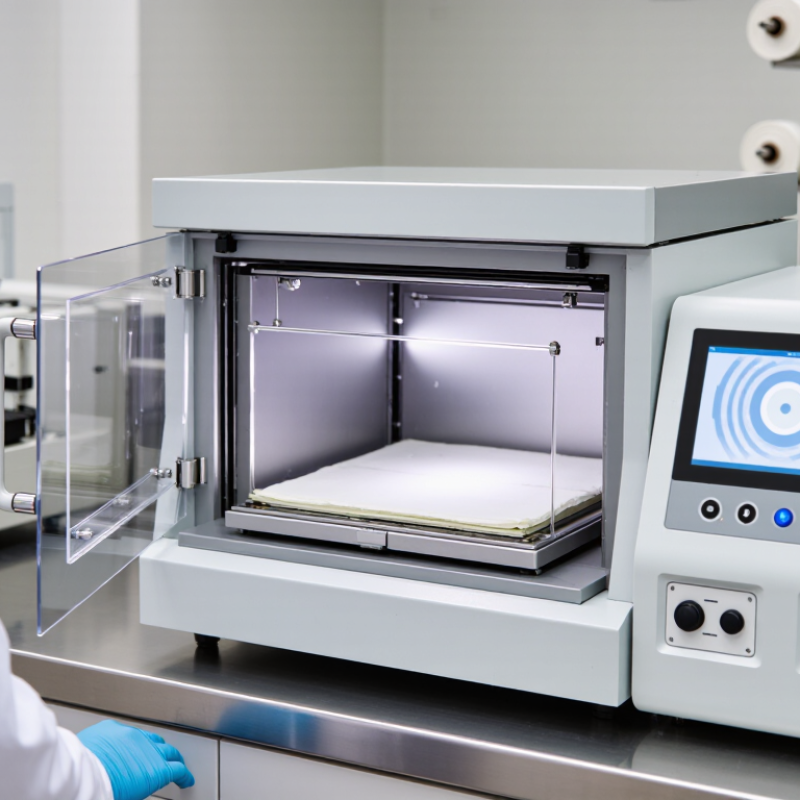
Experienced buyers usually examine pressure stability, test area options, clamping quality, and software traceability. A reliable Air Permeability Tester should maintain steady airflow while preventing edge leakage around the specimen. Imagine testing a fabric sample at 100 Pa, with the operator checking whether the clamp leaves visible marks. Small details can change the result.
Standards matter.
Depending on the product, laboratories may consider methods such as ISO 9237 or ASTM D737. However, selecting a standard is not enough. The supplier should explain calibration routines, reference plates, sensor accuracy, and after-sales support. Factory demonstrations can reveal practical strengths that brochures hide. Ask to review sample reports, repeatability data, and maintenance records before purchasing.
Chinese manufacturers offer broad model choices, competitive engineering, and increasing export experience. Still, “best” is not universal. A low-cost tester may suit basic inspection but disappoint a laboratory requiring automated records and multi-range testing. That assumption can fail. Buyers should compare actual specimens, local service response, spare-part availability, and training quality. A careful decision connects technical evidence with long-term use, not attractive specifications alone. This guide examines the features, verification steps, and supplier questions that help global buyers choose with greater confidence.
An air permeability tester measures how easily air passes through a fabric. It applies a controlled pressure difference across a test specimen. The instrument then records airflow through a defined area. Results commonly appear as millimetres per second or cubic feet per minute per square foot.
ISO 9237 and ASTM D737 provide widely accepted testing methods. ISO 9237 often uses a 100 Pa pressure difference. ASTM D737 commonly specifies 125 Pa for textile testing. Operators clamp the fabric tightly, avoid wrinkles, and condition specimens before testing. Temperature, humidity, fabric weight, coating, and weave structure can change the result. A small leak around the clamp can also distort the reading.
The test matters across clothing, filtration, bedding, and technical textiles. Textile Exchange’s Materials Market Report 2024 reported approximately 124 million tonnes of global fibre production in 2023. Such scale makes repeatable fabric data increasingly important. A breathable sports shirt may need high airflow, while protective fabric may require lower permeability. One number cannot define comfort or safety. That limitation deserves attention. Testing should match the product’s real use.
Experienced laboratories check calibration with certified reference materials and repeat measurements across several fabric areas. They record pressure, specimen direction, conditioning time, and test area. Even then, results may vary between laboratories. Buyers should review the method, uncertainty, maintenance records, and data format before selecting equipment. Low price alone is not evidence of reliable performance.
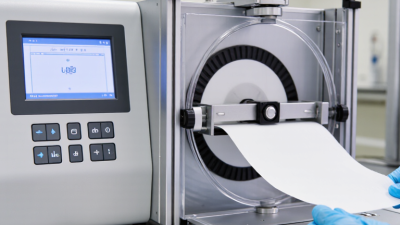
Air permeability testing measures how easily air passes through a textile, membrane, filter, or nonwoven material. The operator clamps a flat specimen over a test opening. A vacuum pump then creates a controlled pressure difference between both sides. Air moves through the material, and a sensor records the flow rate. The instrument displays results in units such as millilitres per square centimetre per second.
The test sounds simple. It is not always simple. Before testing, technicians condition samples under controlled temperature and humidity. They check the specimen for wrinkles, holes, dust, and uneven tension. A poor seal around the clamp can create leakage and distort the result. The test pressure must also match the selected method, such as ISO 9237 or ASTM D737. Different pressures can produce different readings from the same fabric.
Reliable laboratories calibrate the flow sensor and inspect the test area regularly. They usually measure several points across each specimen because one area may not represent the whole roll. In daily work, I have seen small clamping differences change the reading noticeably. That is why repeatability matters as much as speed. A good tester should provide stable pressure, clear data, and traceable calibration records. Operators should still question unusual results instead of accepting every number blindly.
China Best Air Permeability Tester for Global Buyers?
What Features Matter to Global Buyers?
Global buyers need more than a digital display. They need test results that remain comparable across laboratories, climates, and fabric types. ISO 9237 and ASTM D737 are common references for textile air permeability testing. A suitable instrument should support these methods and show clear pressure, flow, and test-area settings.
According to Textile Exchange’s 2024 Materials Market Report, polyester represented about 59% of global fiber production in 2023. This matters because woven polyester, cotton, coated fabric, and technical textiles can require different airflow ranges. A wide measuring range is practical. It reduces repeated instrument changes. Buyers should also check automatic clamping, stable pressure control, and a sealed test head. Small leaks can create large errors.
Repeatability deserves attention. A fast test is not always a reliable test. ASTM D737 emphasizes controlled pressure and consistent specimen handling. The tester should provide calibration records, traceable reference standards, and exportable data. Multi-language software helps, but poor translation can still confuse operators. That detail is often overlooked.
Laboratory experience suggests checking service access before purchase. Ask about calibration intervals, spare seals, training, and local technical support. Energy use and power compatibility also matter for international shipments. I would not choose the cheapest unit automatically. A lower initial cost may become expensive after unstable readings, software issues, or delayed repairs. Even experienced teams can miss this.
China-made air permeability testers deserve attention because production depth can reduce cost without stripping away technical essentials. In textile and paper laboratories, a reliable instrument must control pressure steadily, measure airflow accurately, and display repeatable results. Practical buyers should inspect sensor resolution, test-area options, clamping design, and data export functions. Small details matter. A loose clamp can distort results.
Many Chinese manufacturers support common material-testing methods, including procedures aligned with ISO and ASTM requirements. However, this alignment should be verified through manuals, calibration records, and sample reports, not marketing language. Ask for traceable calibration, factory acceptance data, software screenshots, and remote training before purchasing. A clear service process also matters when a sensor needs replacement or testing requirements change. These checks reveal technical maturity better than a low quotation.
From a buyer’s perspective, China’s supply chain can offer flexible test heads, regional voltage options, and shorter customization cycles. This flexibility helps laboratories testing fabrics, nonwovens, films, or filtration media. Yet cheaper equipment is not automatically dependable. I have seen projects focus on price and overlook long-term verification. That was a costly lesson. Compare repeatability, maintenance access, spare-part availability, and response times across suppliers. Request a live demonstration using your own material, because published accuracy figures may not reflect real samples. Record every result before approving the equipment.
| Evaluation Dimension | Relevant Technical Information | Typical Buyer Requirement | Why China-Made Equipment May Be Considered |
|---|---|---|---|
| Primary Measurement | Airflow passing perpendicularly through a defined test area under a specified pressure difference, commonly reported as L/m²/s or mm/s. | Select a system that reports the unit required by the applicable test method and laboratory procedure. | Many export-oriented systems provide selectable units and software interfaces for international laboratories. |
| ISO 9237 Compatibility | ISO 9237 specifies the determination of air permeability of fabrics and includes controlled pressure-difference testing. | Confirm the test head, pressure control, test area, calibration procedure, and reporting format against the laboratory’s edition of the standard. | A broad selection of configurable textile-testing instruments can support common ISO-based workflows. |
| ASTM D737 Compatibility | ASTM D737 is a widely used method for air permeability of textile fabrics and commonly uses a 38 cm² test area with a 125 Pa pressure differential. | The instrument should support the required test area, pressure setting, airflow range, and calculation method. | Buyers may find models with interchangeable test areas and software settings suitable for multiple procedures. |
| GB/T 5453 Compatibility | GB/T 5453 is a Chinese textile test method for determining air permeability and is commonly referenced for fabric testing in China. | Verify the exact national-standard edition and compare its pressure, test-area, conditioning, and calculation requirements with the instrument configuration. | Domestic manufacturers often design equipment around Chinese textile-testing practices while offering international-standard options. |
| Test Area Options | Common configurations include approximately 5, 20, 38, and 100 cm² test areas, depending on the method and instrument design. | Choose the area specified by the test standard; do not substitute areas without documenting method equivalence. | Configurable fixtures can help one instrument serve apparel, nonwoven, filtration, and technical-textile applications. |
| Pressure-Difference Control | Common textile methods use defined pressure differences such as 100 Pa or 125 Pa; the correct value depends on the selected standard and product category. | Require stable automatic pressure control and a documented control tolerance suitable for the target method. | Buyers can compare economical systems with higher-specification models according to the required pressure-control performance. |
| Applicable Materials | Typical applications include woven fabrics, knitted fabrics, nonwovens, coated textiles, filter media, paper-like materials, and protective fabrics when the method is applicable. | Confirm airflow range, clamping arrangement, sealing method, and test-area suitability for the material’s thickness and permeability. | A wide manufacturing base makes it practical to source specialized fixtures for different material categories. |
| Clamping and Sealing | Uniform clamping and an airtight seal are essential to reduce leakage around the specimen and improve repeatability. | Inspect gasket quality, clamp pressure, specimen handling, and fixture durability before purchase. | Replacement seals and custom fixtures may be easier to source when the supplier maintains local production capability. |
| Measurement and Display | Digital instruments typically display pressure difference, airflow, calculated air permeability, test status, and measurement results. | Request clear display resolution, password protection where needed, data storage, and selectable reporting units. | Modern models commonly offer touchscreen operation and multilingual or English-language interfaces. |
| Calibration and Traceability | Calibration should address the pressure sensor, airflow measurement system, and relevant reference devices according to the laboratory quality system. | Ask for calibration procedures, certificates, recommended intervals, and uncertainty information before acceptance. | The purchase price may allow budget allocation for initial calibration, spare parts, and staff training. |
| Data Management | Useful functions include specimen identification, automatic averaging, statistical summaries, result export, and report generation. | Confirm USB, Ethernet, printer, or file-export compatibility with the laboratory information workflow. | Software customization and integration requests may be available at comparatively accessible engineering costs. |
| Electrical Requirements | Laboratory instruments are commonly supplied for regional single-phase power systems, but voltage and frequency must be confirmed before shipment. | Specify the destination country’s voltage, frequency, plug type, grounding, and any electrical safety requirements. | Export suppliers often provide different electrical configurations for overseas installations. |
| After-Sales Support | Support may include installation guidance, operating manuals, remote troubleshooting, preventive-maintenance instructions, and replacement parts. | Evaluate response time, English documentation, warranty terms, spare-part availability, and technician training. | Direct communication with the manufacturing source can simplify customization and technical feedback. |
| Total Cost of Ownership | Total cost includes the instrument, fixtures, calibration, freight, import charges, software, maintenance, consumables, and training. | Compare complete delivered cost and verified performance rather than purchase price alone. | Competitive manufacturing costs can be beneficial when quality documentation and service capability are also verified. |
Buyer’s note: Technical values and test conditions must be confirmed against the latest applicable edition of ISO 9237, ASTM D737, GB/T 5453, or the customer’s specified method. Compliance should be verified through technical documentation, calibration records, and sample testing before purchase.
Choosing an air permeability tester starts with your material, not its price. Textiles, medical nonwovens, filter media, and paper require different test conditions. ISO 9237 uses a defined pressure difference for textile testing, while ASTM D737 specifies controlled airflow measurement. The method must match your customer’s specification.
Check the test range, pressure stability, sample area, and airflow resolution. A narrow range may suit lightweight fabrics but fail with dense filter media. For global production, confirm whether the instrument supports Pa, kPa, and commonly used airflow units. Grand View Research estimated the global nonwoven fabric market at about USD 53.5 billion in 2023. Its forecast indicates continued growth through 2030, increasing the need for repeatable quality control. Small measurement errors can become expensive batch problems.
Tips: Request repeatability data from the supplier. Ask for calibration records and verification plates. Test your own samples before purchase. Compare results with your current laboratory method. Temperature and humidity matter more than many buyers expect. Keep them controlled. Also check software export formats and operator training. A technically advanced tester can still create unreliable results when setup instructions are unclear. This is where selection becomes less perfect: the highest specification is not always the best fit. Practical compatibility usually matters more.