• facebook
  • youtube
  • linkedin
Leave Your Message

7 Tips for Choosing a Tensile Strength Machine

Choosing a Tensile Strength Machine is a measurement decision, not just a purchase. The right system must match your materials, test methods, force range, and production needs. A thin polymer film stretches differently from a metal coupon. Grip design, alignment, and extensometer choice can change the result.

Professional standards offer a practical starting point. ASTM E8/E8M covers tension testing of metallic materials, while ASTM D638 addresses tensile properties of plastics. ISO 6892-1 specifies tensile testing of metallic materials at room temperature. These references help buyers define test requirements before comparing machines. They also show why a single load-capacity figure cannot tell the whole story.

Small details matter. A slippery specimen can shift in the grips. An undersized load cell may reduce useful measurement resolution. A poorly matched test frame can waste lab space and budget. This guide examines seven selection factors, from force capacity and accuracy to software, calibration, and service support. Check each against your actual specimens and workload.

Reliable guidance also needs traceable sources. No industry report or verified expert quotation was supplied with the request, so I won’t invent market figures or attribute a statement to a named specialist. ASTM and ISO standards provide a sound technical foundation; confirm the current editions and relevant requirements with your testing team before specifying a machine.

7 Tips for Choosing a Tensile Strength Machine

Define Your Testing Requirements and Materials

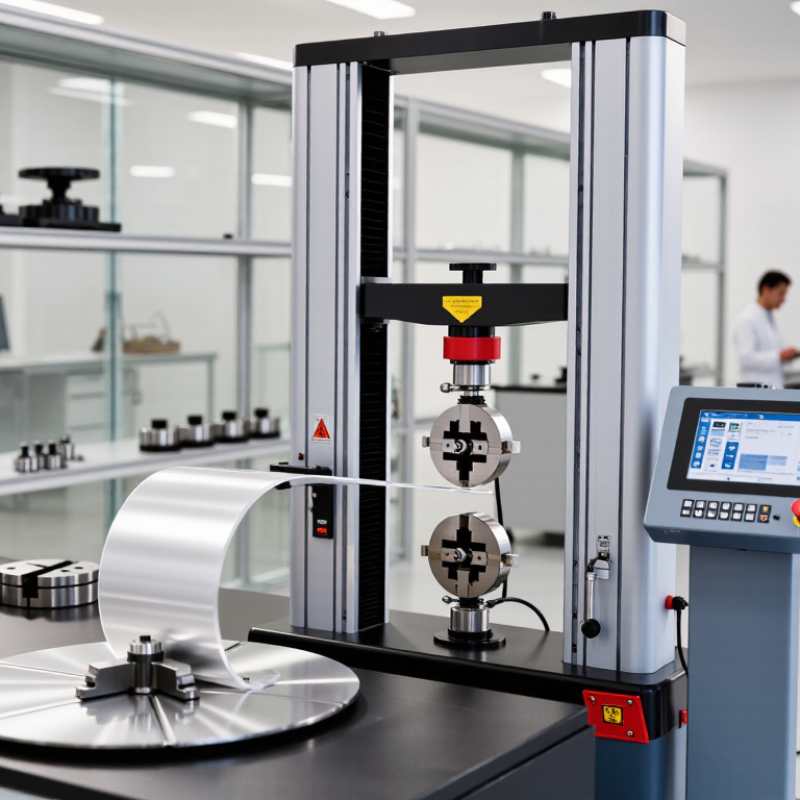
Before comparing machines, define what the test must measure. List the materials, expected force range, specimen dimensions, and test speed. A thin film may need a low-force load cell, while a thick metal coupon can require much greater capacity. Check the complete test setup, too: grips, extensometer, and software can affect results. Small details matter.

Tip 1: Match the machine’s capacity to your actual test range, not just the strongest specimen you might test someday. Running every test near the bottom of an oversized load cell can reduce useful measurement resolution. Tip 2: Consider how each material behaves. Rubber stretches considerably; brittle plastics may fracture suddenly. Grip design should hold the specimen without crushing or slipping. That can mislead. A mark near the grip edge can help reveal slippage during a trial.

Tip 3: Write down the test conditions you need to reproduce, including speed, gauge length, and environmental temperature. Then check whether the machine and accessories can maintain them. If a recognized test method applies, use its requirements to guide your selection. Don’t assume one fixture suits every material. It is easy to over-specify capacity; review your expected loads again before purchasing. A short trial with representative specimens can expose awkward setup steps that a specification sheet will not show.

Choose the Right Machine Configuration and Load Capacity

Choose machine configuration around the specimen, not just its strongest expected load. ISO 6892-1 describes tensile testing of metallic materials, including controlled testing conditions; ASTM E8/E8M sets out test methods and specimen requirements. These references matter because gauge length, grip style, and strain measurement affect what the machine must accommodate. A round specimen may need wedge grips, while thin sheet often needs flat grips and careful alignment. Small details count.

Size capacity from measured specimen area and credible material-strength data. For example, a 6 mm round specimen has an area of about 28.3 mm². At an assumed tensile strength of 600 MPa, its estimated peak force is roughly 17 kN. This is a calculation, not a material guarantee; check a recognized source such as ASM Handbook data for the exact alloy and product condition. Choose a load cell that keeps expected forces within its accurate working range, with room for stronger samples. Too much capacity can reduce useful resolution. Too little risks overload.

Match the frame to the full test setup: required elongation, extensometer range, grip opening, and specimen length. Electromechanical frames often suit moderate forces and precise, slower tests; hydraulic systems can serve higher-force applications. Verify the method’s rate requirements against the machine’s control capability. It is easy to overlook travel. A long specimen can stretch farther than expected. Recheck that assumption before ordering.

Compare Accuracy, Calibration, and Measurement Range

Accuracy, calibration, and measurement range should be compared together. Accuracy describes how close a result is to the true force; resolution only shows the smallest displayed increment. A screen reading in 0.1-newton steps can still be inaccurate. Check the stated accuracy across the loads you expect to use, not only at maximum capacity. For example, a thin film may need reliable readings at low force, while a metal coupon may require a much higher load. Small differences matter. Ask how the machine’s accuracy was verified and whether the calibration certificate identifies the tested force points. Calibration should be traceable, current, and repeated at intervals suited to use and handling. A machine that gets moved between rooms may need checking sooner.

Then inspect the measurement range against actual specimens and grips. If tests regularly fall near the bottom of the load cell’s range, readings may be less useful; if a specimen could exceed capacity, the setup is unsuitable. Leave sensible headroom without choosing an oversized sensor that sacrifices low-load detail. Also compare extension measurement range, since long-stretch materials can exceed a short-travel setup even when force capacity is adequate. Confirm which accessories affect the usable range. One detail is easy to miss: changing grips can shift alignment and affect results. Recheck the setup after changes, and question any specification that lacks test conditions.

Evaluate Grips, Software, Safety, and Ease of Use

A tensile machine is only as dependable as its contact with the specimen. Choose grips suited to the material: serrated jaws may hold metal securely, while softer faces can reduce damage to polymers. Watch a trial run for slipping, jaw marks, and uneven stretching. Small details matter. ISO 7500-1:2018 classifies force-measuring systems; Class 1 allows ±1% indication error, while Class 0.5 allows ±0.5% within its specified range. Ask for a current verification certificate covering the forces your tests actually use, not just the machine’s maximum capacity.

Software should record force, extension, units, specimen dimensions, and test settings together. Check whether raw data can be exported and whether edits or failed runs remain traceable. ASTM E4 provides recognized practices for verifying force-measuring systems, but verification alone cannot fix poor setup or unclear procedures. Safety features deserve a hands-on check: inspect the guard, emergency stop, and access around moving grips. Then try loading a real specimen. Can an operator align it without reaching into a pinch point? Ease of use is easy to underestimate; crowded menus can invite setup mistakes. Even good software feels awkward at first. That deserves a second look.

7 Tips for Choosing a Tensile Strength Machine

Evaluate grips, software, safety, and ease of use—starting with the force your materials require.

Typical tensile strength ranges vary with alloy, temper, and processing. Use the expected maximum test force to choose machine capacity and suitable grips; force depends on tensile strength multiplied by specimen cross-sectional area. Also check software controls, safety features, and ease of setup.

Approximate ranges in MPa; actual values depend on material grade and condition.

Check Standards Compliance, Service, and Total Cost of Ownership

A tensile strength machine should match the test method your materials actually require. Check whether its configuration supports the relevant ASTM or ISO standard, including specimen dimensions, test speed, and measurement range. A standards logo alone is not enough; ask which test methods are covered and whether the supplied grips and fixtures are suitable. Small details matter. A jaw that slips during a test can distort results and waste specimens.

Service quality affects whether the machine stays dependable after installation. Ask how calibration is handled, how quickly technical support responds, and whether replacement parts are readily available. Request a sample maintenance schedule and clarify what training operators receive. Ask for specifics. A technically capable machine can still cause delays if routine service takes weeks to arrange.

Compare total cost of ownership, not just the purchase price. Include calibration, fixture changes, software updates, operator training, and likely downtime over several years. A lower-cost machine may need more frequent service; a higher-priced option may not repay its premium for low test volumes. Still, spreadsheets miss things. Estimate how many tests could be delayed if the machine is unavailable, and check whether that estimate reflects your real workflow.

7 Tips for Choosing a Tensile Strength Machine - Check Standards Compliance, Service, and Total Cost of Ownership

Tip Decision Dimension What to Check Useful Evidence or Questions
1 Standards compliance Match the test method to the material and test conditions. Common examples include ASTM E8/E8M or ISO 6892-1 for metallic materials, and ASTM D638 or ISO 527 for plastics. Ask which standard editions and procedures the proposed configuration supports. Confirm that grips, extensometers, software, and specimen preparation meet the method requirements.
2 Force capacity and measurement range Choose capacity based on expected test forces, specimen types, and future work. A suitable load cell should measure the anticipated forces within its specified operating range. Request the force-measurement accuracy specification and its stated range. Check whether interchangeable load cells are available if your work spans substantially different force levels.
3 Test space and accessories Check the frame’s vertical and horizontal clearance, crosshead travel, grip compatibility, and options for extensometers or environmental chambers. Compare the machine layout with actual specimen dimensions and fixtures. Confirm which accessories are included, optional, or require separate installation.
4 Calibration and verification Establish how force and any strain-measurement devices will be calibrated or verified, and how results will be documented. ISO 7500-1 addresses verification of force-measuring systems on uniaxial testing machines for metallic materials. Ask for sample calibration documentation, recommended intervals, and available service arrangements. Where required, check whether calibration is performed by a laboratory accredited to ISO/IEC 17025 for the relevant scope.
5 Software and data handling Confirm that software supports the required test methods, calculations, reporting, user permissions, and data export formats. Request a demonstration using a representative test. Check software licensing, updates, data backup options, audit-trail needs, and compatibility with your operating environment.
6 Service, training, and safety Evaluate installation, operator training, maintenance support, spare-parts availability, and safeguards such as emergency stops and appropriate guarding. Ask about response arrangements, service coverage, preventive-maintenance recommendations, training format, and the procedure for obtaining replacement parts.
7 Total cost of ownership Look beyond the purchase price. Include installation, fixtures, software, calibration, maintenance, training, utilities, consumables, and potential downtime over the planned service life. Compare written quotations using the same scope and time period. Identify recurring fees, excluded items, warranty terms, and costs for future upgrades or additional test methods.

Note: Confirm the applicable standard, edition, and acceptance requirements with the relevant test method or quality procedure before purchase.