What is a Yarn Evenness Tester and How Does It Work?
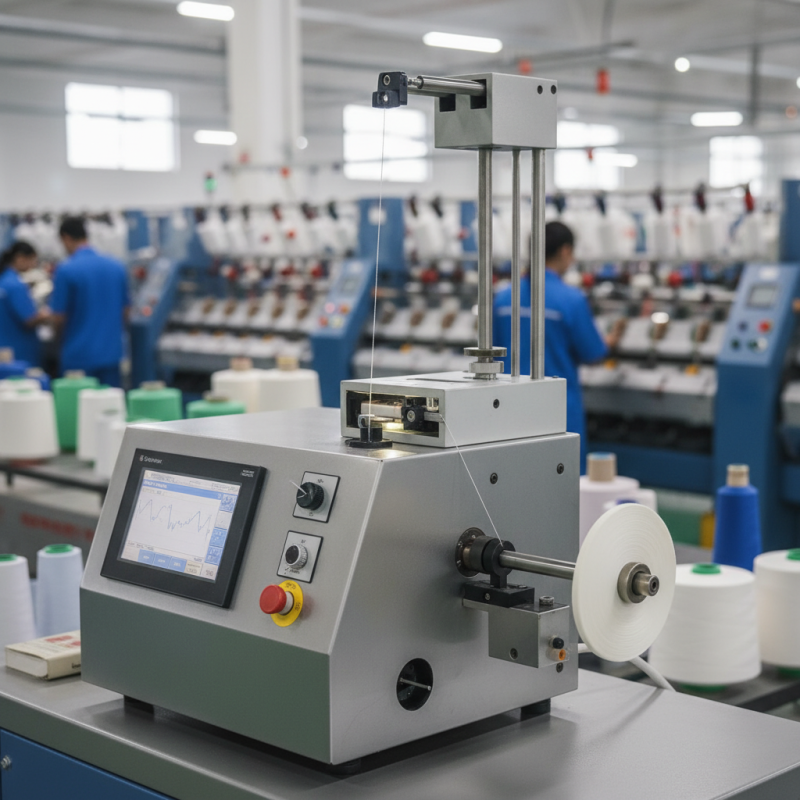
The Yarn Evenness Tester is a vital tool in the textile industry. It measures the uniformity of yarns produced during textile manufacturing. Achieving consistent yarn quality is crucial for producing high-quality fabrics.
This device provides precise measurements of yarn thickness at various intervals. An uneven yarn can lead to issues in fabric strength and appearance. Testing yarn evenness allows manufacturers to identify problems early and make necessary adjustments.
Despite its importance, some may overlook the need for regular testing. Inconsistent results in yarn quality can impact the overall production process. Investing time in a Yarn Evenness Tester can save resources and improve product quality. A commitment to measurement enhances the final textile's performance. Yet, many manufacturers may hesitate, fearing the costs involved. Reflections on this approach might yield better long-term gains.
What is a Yarn Evenness Tester?
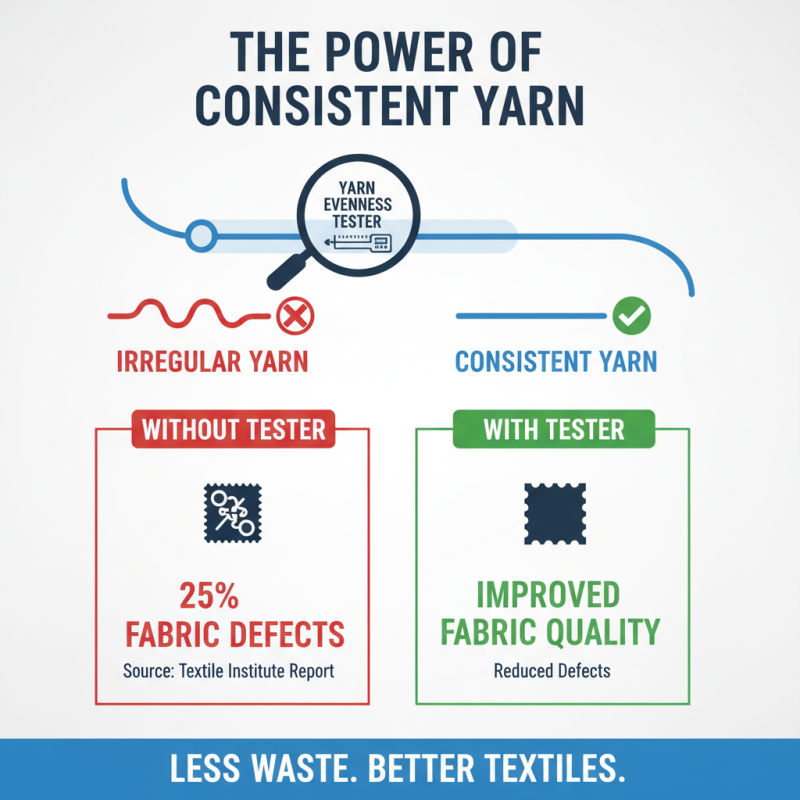
A Yarn Evenness Tester is a crucial tool in textile manufacturing. It measures the consistency of yarn thickness. This consistency directly affects the quality of the final fabric. Irregular yarn can lead to defects in weaving or knitting processes. According to a report by the Textile Institute, uneven yarn accounts for nearly 25% of fabric defects.
The device functions by analyzing the diameter of the yarn over a specific length. It provides data on variations in thickness, which can indicate underlying production issues. For instance, fluctuating tension during spinning can cause these variations. Studies show that 30% of manufacturers are not fully utilizing testers. This oversight can lead to increased wastage and lower quality fabric.
It’s important to recognize that while measuring evenness is vital, it is not a standalone solution. Yarn producers also need to focus on upstream processes. Regular maintenance of equipment is often neglected, impacting yarn quality. Inadequate training of machine operators can also contribute to inconsistencies. A holistic approach is necessary to truly improve yarn production standards.
How Does a Yarn Evenness Tester Function?
A yarn evenness tester plays a crucial role in textile manufacturing. This device evaluates the consistency of yarn appearance and thickness. It measures variations in diameter, which affects the performance of the end product. According to a recent report by the International Textile Manufacturers Federation, nearly 70% of fabric defects arise from inconsistent yarn quality.
The yarn evenness tester uses advanced sensors to identify fluctuations in yarn diameter. These sensors capture data in real-time, allowing for immediate analysis. A calibration process ensures the tester provides accurate readings. When yarn variations exceed acceptable limits, manufacturers can adjust their processes.
However, not all testing methodologies guarantee precise results. Some may overlook minor inconsistencies, resulting in potential quality issues during the production.
In practice, companies often encounter challenges with yarn evenness. Environmental factors like humidity can influence measurements. Additionally, the quality of raw materials varies significantly. This variability complicates the testing process. A study published in the Textile Research Journal noted that up to 15% of yarn batches fail evenness tests.
Identifying these flaws early helps maintain product standards. The effectiveness of yarn evenness testers is crucial in achieving high-quality textiles.
Applications of Yarn Evenness Testing in Textile Industry
Yarn evenness testing is a critical aspect of the textile industry. It ensures quality and performance in fabric production. Inconsistent yarn can lead to defects in the final product. A recent industry report indicated that 72% of textile defects originate from uneven yarn. This highlights the importance of thorough testing.
Applications of yarn evenness testing span various sectors. In spinning mills, it ensures that yarn meets specified standards. This is crucial for manufacturers aiming for high-quality fabric. Proper testing can improve production efficiency. Studies suggest that implementing stringent testing protocols can increase throughput by up to 30%.
Moreover, evenness testing plays a role in retail. Consumers expect flawless textiles. Poor-quality yarn can result in returns and decreased customer satisfaction. A staggering 40% of customers cite fabric quality as a key factor in their purchasing decisions. Thus, evenness testing not only affects production but also impacts the retail landscape significantly. Investing in yarn evenness testers can lead to better quality control and improved market competitiveness.
What is a Yarn Evenness Tester and How Does It Work? - Applications of Yarn Evenness Testing in Textile Industry
| Test Parameter |
Measurement Unit |
Typical Range |
Importance in Textile Industry |
| Yarn Count |
Tex, Denier |
30-80 Tex |
Indicates yarn thickness and weight. |
| Evenness Index |
% |
5-10% |
Indicates uniformity of yarn across length. |
| Imperfections |
Count per km |
<10 |
Affects fabric quality and appearance. |
| Strength |
N/A |
Varies by material |
Crucial for end-use applications. |
| Hairiness |
mm |
<2 |
Impacts handle and fabric finishing. |
Importance of Yarn Evenness for Quality Control
Yarn evenness is crucial for maintaining quality control in textile manufacturing. Uneven yarn can lead to defects in the final fabric, impacting both aesthetics and performance. According to a report by the International Textile Institute, yarn irregularities can reduce the fabric's tensile strength by up to 25%. This shows just how vital it is to monitor yarn evenness closely.
Testing yarn evenness involves measuring variations in thickness and density. A Yarn Evenness Tester performs this task efficiently. It collects data on the yarn's diameter and reports irregularities. By analyzing this data, manufacturers can identify problems early in the production process. This helps minimize waste and ensures consistency in the final product.
Tips: Regular calibration of testing equipment enhances accuracy. Improper settings can lead to misleading data. Keeping yarn samples in controlled environments prevents external factors from affecting results. This attention to detail helps maintain the desired quality levels. After all, even a minor flaw can compromise an otherwise perfect textile.
Yarn Evenness Tester Results
This chart displays the evenness of yarn samples based on their CV values (Coefficient of Variation). A lower CV indicates better evenness, which is crucial for maintaining quality control in textile manufacturing.





 Home
Home