Home
In the realm of material science and packaging, understanding moisture levels is crucial for product integrity and longevity. As we approach 2025, the significance of accurately measuring water vapor transmission is more important than ever. Experts in the field, such as Dr. Emily Carter, a leading authority on packaging technology, emphasize that “Selecting the right Water Vapor Transmission Tester is crucial for ensuring the longevity and effectiveness of products exposed to variable humidity.” This statement resonates with the evolving needs of industries that rely on precise moisture measurements to maintain quality standards.
As organizations strive for excellence, choosing the right testing equipment becomes paramount. With numerous options available, navigating through the myriad of Water Vapor Transmission Testers can be challenging yet rewarding. Identifying the top performers in the market will not only enhance accuracy in moisture measurement but also contribute to improved product development and innovation. In this article, we will explore the top 10 Water Vapor Transmission Testers of 2025, detailing their features, advantages, and best use cases to help industry professionals make informed decisions tailored to their specific needs.
Water vapor transmission testing is essential for assessing the moisture barrier properties of materials, especially in industries such as packaging, construction, and textiles. There are several recognized methods for evaluating the permeability of materials, with the most common being the ASTM E96, which specifies the procedures for determining water vapor transmission rate (WVTR). According to a recent industry report, nearly 35% of product failures in packaging can be attributed to inadequate moisture control, highlighting the importance of accurate testing methods.
One advanced technique that has gained traction is the Dynamic Vapor Sorption (DVS) method. This approach provides precise measurements of moisture adsorption and desorption behavior, which is critical for materials that are sensitive to humidity fluctuations. Research published in the Journal of Packaging Science and Technology indicates that materials tested using DVS showed improved accuracy in predicting long-term performance compared to traditional methods. This advancement not only enables better product longevity but also contributes to sustainability efforts by reducing waste associated with material failures.
When selecting a winter vapor transmission tester, several key features should be considered to ensure accurate moisture measurement. First and foremost, the tester should possess high sensitivity and a precise measurement range, with many industry standards suggesting a measurement capacity that extends down to 0.1 g/m²/day. This level of sensitivity is crucial for various applications, including packaging materials and pharmaceutical products, where even minimal moisture ingress can significantly affect quality.
Another important feature is the testing environment control capabilities of the device. Reliable testers often provide temperature and humidity regulation, as these factors can profoundly influence the results. According to recent industry reports, approximately 30% of moisture-related failures in product manufacturing can be attributed to temperature variances during testing. Therefore, ensuring that the tester can simulate real-world conditions accurately is vital for obtaining reliable data.
Additionally, ease of use and data reporting functionality are essential considerations. Devices equipped with user-friendly interfaces, automated data recording, and integration capabilities with software analytics tools offer significant advantages. With the right tools, businesses can streamline their quality assurance processes, enhancing overall product reliability and customer satisfaction.
When evaluating the top brands of water vapor transmission testers, it's essential to consider their unique features and the technology they employ. Leading companies in this space often incorporate advanced methodologies, such as ASTM E96 or ISO 2528, ensuring compliance with international standards for moisture permeability measurement. According to a recent industry report from Smithers Pira, the demand for moisture control in packaging and construction materials has steadily increased, necessitating reliable testing equipment to prevent issues like mold and degradation.
Among the best offerings, you might find products from brands like Mocon and Permeance. Mocon’s AquaBARRIER series, for instance, utilizes an effective dual chamber method that enhances accuracy in readings. Permeance’s TestEase line is praised for its user-friendly interface and efficiency, catering to both laboratory and field applications. These advanced options demonstrate a trend towards more portable and versatile instruments, as highlighted in a study by the Packaging Association, indicating a growing preference for devices that can operate in various environments.
Tips: When selecting a vapor transmission tester, ensure it fits your specific materials and applications. Look for testers that provide real-time data and have robust software integration capabilities. Regular calibration and maintenance of the equipment are crucial for consistent results, as even slight deviations in the measurement process can lead to significant misunderstandings in moisture levels.
Moisture measurement tools play a crucial role in various industries, ensuring high-quality products and processes. In construction, for instance, accurate moisture measurement is essential to prevent issues such as mold growth and structural damage. Builders often use sophisticated water vapor transmission testers to assess the moisture content in building materials like concrete and wood. By understanding the moisture levels, they can make informed decisions about sealing, insulation, and overall material selection, reducing the risk of future defects.
In the food packaging industry, moisture measurement tools are paramount for maintaining product freshness and safety. Water vapor transmission testers help manufacturers evaluate the effectiveness of packaging materials in preventing moisture infiltration. This is especially important for perishable goods, as excess moisture can lead to spoilage and compromised product integrity. Additionally, the pharmaceutical and electronics industries rely on moisture measurement to ensure that their products remain effective and undamaged during storage and transport, highlighting the versatility and importance of these testing tools across diverse sectors.
| Model | Measurement Range | Accuracy | Testing Method | Sample Size | Weight |
|---|---|---|---|---|---|
| Model A | 0.1 - 5 g/m²·day | ±1% | Cup Method | 100 cm² | 3.5 kg |
| Model B | 0.05 - 10 g/m²·day | ±0.5% | Gravimetric | 200 cm² | 4.0 kg |
| Model C | 0.01 - 15 g/m²·day | ±1.5% | Desiccant Method | 50 cm² | 2.5 kg |
| Model D | 0.1 - 20 g/m²·day | ±2% | Breatheable Test | 300 cm² | 4.5 kg |
| Model E | 0.2 - 25 g/m²·day | ±1% | Hydrostatic | 150 cm² | 3.8 kg |
| Model F | 0.1 - 30 g/m²·day | ±0.8% | Dynamic Test | 400 cm² | 5.0 kg |
| Model G | 0.05 - 12 g/m²·day | ±1.2% | Calorimetric | 200 cm² | 3.3 kg |
| Model H | 0.1 - 18 g/m²·day | ±1% | PVD Test | 250 cm² | 4.2 kg |
| Model I | 0.15 - 22 g/m²·day | ±1.5% | Open Cup Method | 350 cm² | 4.8 kg |
| Model J | 0.1 - 10 g/m²·day | ±1% | EC Method | 175 cm² | 3.0 kg |
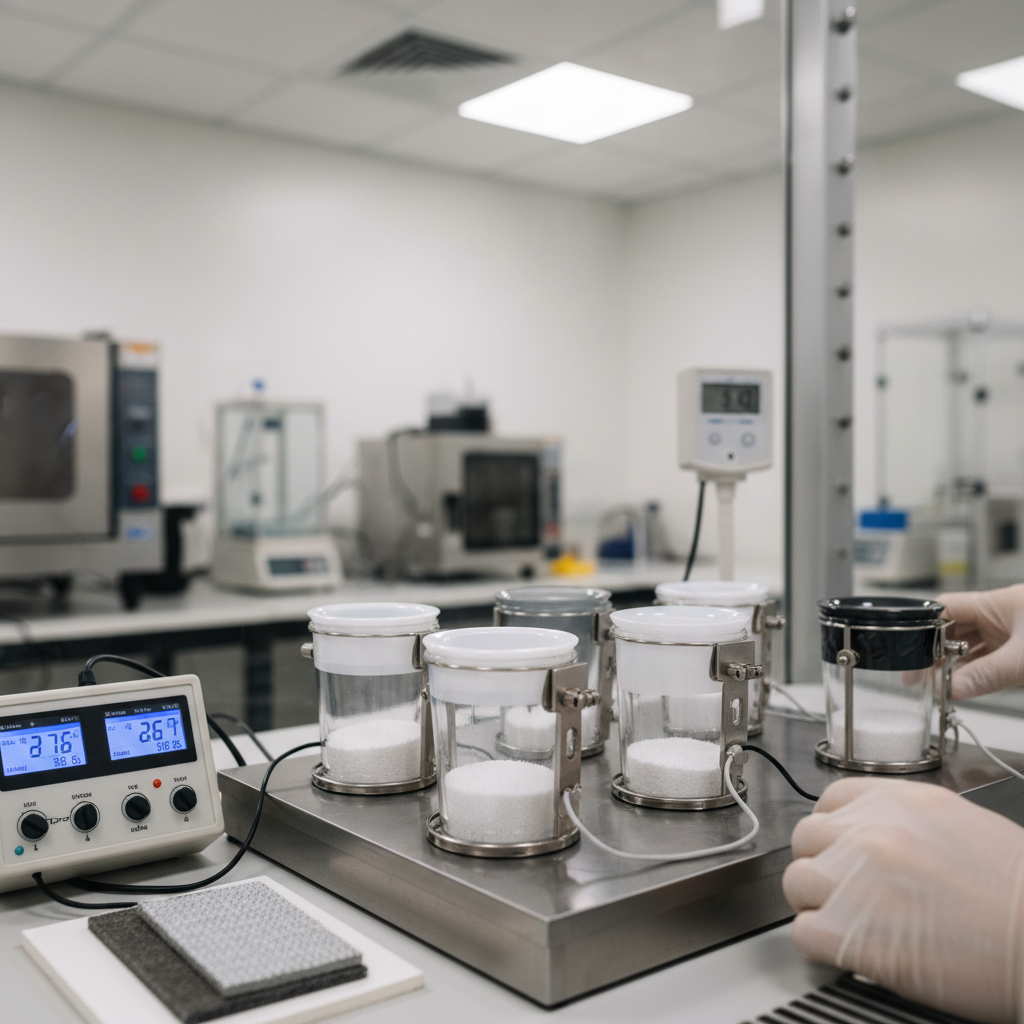
When conducting water vapor transmission testing, accuracy is paramount to achieving reliable results. One key tip is to ensure that the testing environment is controlled; fluctuations in temperature and humidity can significantly affect the measurements. According to a study by the American Society for Testing and Materials (ASTM), variations as small as 1°C can introduce errors in moisture readings, impacting long-term material performance assessments. Therefore, maintaining a stable environment with monitored conditions is crucial for precise outcomes.
Another vital aspect is the calibration of testing equipment. Regular calibration to recognized standards helps mitigate discrepancies in data collection. The International Organization for Standardization (ISO) suggests that instruments used for moisture testing should be calibrated at least once per year or after a significant number of tests. By adhering to this practice, users can ensure that their results are not only accurate but also comparable across different tests, which is essential for quality control in material manufacturing. Investing in high-quality testers, such as those listed in the top rankings, can pay dividends in achieving consistent and accurate moisture measurements.