Top 10 Textile Laboratory Testing Equipment You Need to Know?
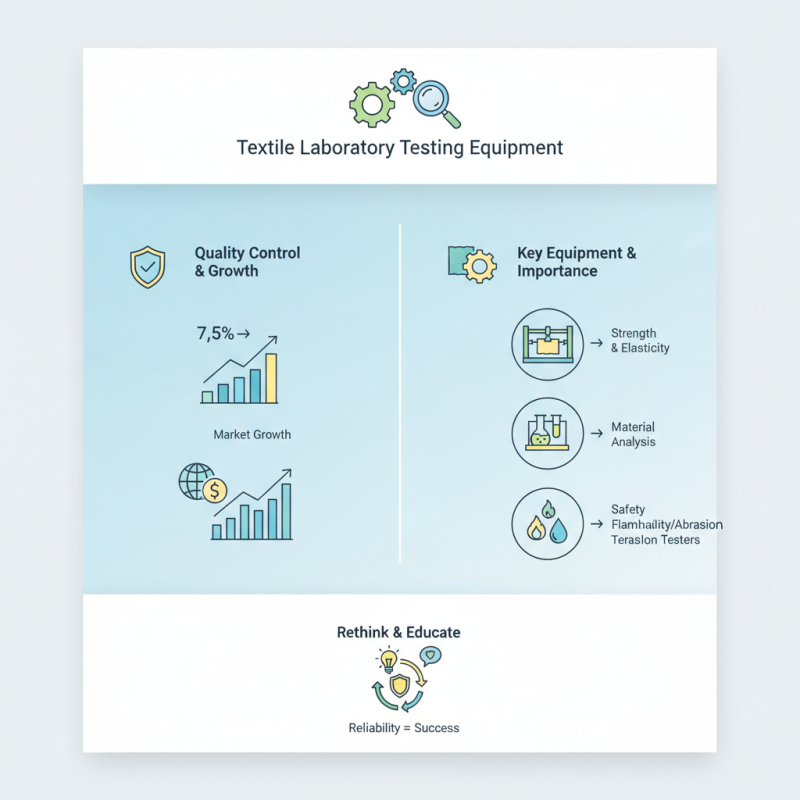
In the textile industry, precise quality control is essential. Textile Laboratory Testing Equipment plays a pivotal role in assessing fabric performance and safety. According to the Global Textile Testing Equipment Market report, this market is expected to grow by 7.5% annually. This highlights the increasing demand for accurate testing methodologies.
Various testing methods exist, from physical properties to chemical analysis. Each piece of equipment has its unique function, influencing product quality. For instance, tensile testers measure the strength and elasticity of fabrics. Yet, many companies overlook these crucial tools, risking product failure.
Missteps in testing can lead to significant financial loss. The industry often faces challenges in standardizing testing across different regions. As manufacturers prioritize cost, they may sacrifice thorough testing. This presents a need for continual education on the importance of reliable Textile Laboratory Testing Equipment. Rethinking testing strategies is vital for long-term success.
Overview of Textile Laboratory Testing Equipment
Textile laboratory testing equipment plays a crucial role in ensuring quality control in the textile industry. Proper testing helps assess the durability, safety, and performance of materials and products. The global textile testing market is projected to grow at a rate of 5.5% annually, reaching approximately $1.5 billion by 2025. This suggests a rising demand for advanced testing solutions.
Key testing equipment includes tensile testers, color fastness testers, and pH meters. Tensile testers measure the strength of fabrics, providing essential data for manufacturers. For example, fabrics with a tensile strength below industry standards often perform poorly in real-world applications. Color fastness testers assess how well a fabric retains its color when exposed to various conditions. This is critical, as over 30% of consumers consider color fading a major quality issue.
Not all testing equipment is user-friendly. Some require significant training to operate effectively. Moreover, results can vary based on environmental factors. This highlights the need for consistent calibration and maintenance. A study suggests that over 20% of textile testing results may be compromised due to improper handling. Continuous improvement in testing practices is necessary to enhance reliability and accuracy in textile production.
Top 10 Textile Laboratory Testing Equipment
This chart displays the top 10 textile laboratory testing equipment along with the number of laboratories currently using each type of equipment. The data highlights the most commonly utilized testing tools in the textile industry.
Importance of Accurate Testing in Textile Manufacturing
In textile manufacturing, accurate testing is essential. It ensures that materials meet required standards. High-quality textiles depend on precise measurements. Small errors can lead to significant issues down the line. For example, a slight miscalculation in strength can result in fabric failure. This highlights the importance of reliable testing equipment.
The testing process is often complex. Various factors, such as fabric type or dye, can affect results. Not all labs follow the same protocols; this may lead to inconsistencies. It's vital to choose the right testing equipment for specific needs. Even the most sophisticated machine has limitations. Regular maintenance and calibration are necessary to ensure accuracy.
In many cases, manufacturers rely on outdated methods. They may overlook innovations that improve testing efficiency. This can hinder quality control efforts. Developing a better understanding of lab testing can help in making informed decisions. Accurate results not only enhance product quality but also increase customer satisfaction. Overall, the fabrics released into the market must pass stringent tests to build trust with consumers.
Top 10 Textile Laboratory Testing Equipment You Need to Know
| Equipment Name |
Purpose |
Testing Standards |
Key Features |
| Fabric Strength Tester |
Measures tensile strength and elongation of fabrics. |
ASTM D5034, ISO 13934 |
Digital display, adjustable speed, automatic data capture. |
| Color Fastness Tester |
Evaluates color retention of textiles under various conditions. |
ISO 105, AATCC 61 |
Multiple test conditions, easy-to-read results. |
| Air Permeability Tester |
Measures the airflow through textiles, indicating breathability. |
ASTM D737, ISO 9237 |
User-friendly interface, adjustable pressure settings. |
| Moisture Management Tester |
Tests moisture wicking and absorption properties of fabrics. |
AATCC 195 |
Rapid results, comprehensive analysis. |
| Pilling Tester |
Evaluates fabric's tendency to pill under rubbing conditions. |
ASTM D4970, ISO 12945 |
Standardized rub cycles, clear result indicators. |
| Shrinkage Tester |
Measures dimensional stability of fabrics after washing. |
AATCC shrinkage test |
User-configurable washing cycles, reporting software. |
| Flammability Tester |
Tests fabric's resistance to flame. |
ASTM D6413, ISO 15025 |
Digital control, automatic gas control. |
| Spectrophotometer |
Measures color properties in textiles. |
ASTM E308 |
High accuracy, multiple color analysis modes. |
| Thermal Conductivity Tester |
Evaluates how well a fabric conducts heat. |
ASTM D1518 |
User-friendly design, rapid measurement. |
Key Types of Textile Testing Equipment
When it comes to textile testing, having the right equipment is essential. Key types of textile testing equipment include tensile testers, colorfastness testers, and abrasion testers. Each plays a unique role in evaluating fabric quality and performance. According to a recent industry report, 75% of textile manufacturers prioritize quality assurance through rigorous testing. This highlights the significance of investing in reliable testing equipment.
Tensile testers are crucial for measuring how materials respond to tension. They help determine the strength and durability of a fabric. Colorfastness testers assess how well textiles retain their color when exposed to light, water, or washing. If a fabric fades quickly, it can impact the overall product quality. Abrasion testers evaluate how well a material withstands wear and tear over time. This is vital, especially for fabrics used in high-friction areas.
Tips: Always calibrate your equipment regularly. Calibration ensures accuracy and reliability. Consider running tests in batches for consistent results. It's important to be aware that even the best equipment can yield inconsistent data if not maintained properly. Regular training on equipment use can also enhance your testing processes. Reflect on the testing outcomes. Are they meeting your expectations?
Features to Consider When Selecting Testing Equipment
When choosing textile laboratory testing equipment, consider several key features.
Accuracy is vital. You need reliable measurements for consistency. Even minor errors can lead to significant issues later. Think about the equipment's range, too. It should cover various fabric types, from delicate silks to heavy denims.
Ease of use matters just as much. Complicated interfaces can lead to mistakes. Training staff can be time-consuming and costly. Look for intuitive controls and clear manuals. Portability also comes into play. Some equipment is bulky, making it hard to move between labs. Lightweight options can save time and effort.
Don’t forget about maintenance. Regular upkeep is essential to ensure longevity. Some pieces require specialized servicing, which can lead to delays. Reflect on your budget as well. Sometimes, the cheapest option entails hidden costs.
Striking a balance between quality and price is critical. Consider all these aspects carefully before making a decision.





 Home
Home