Top Friction Tester Machine Models for Accurate Material Testing?
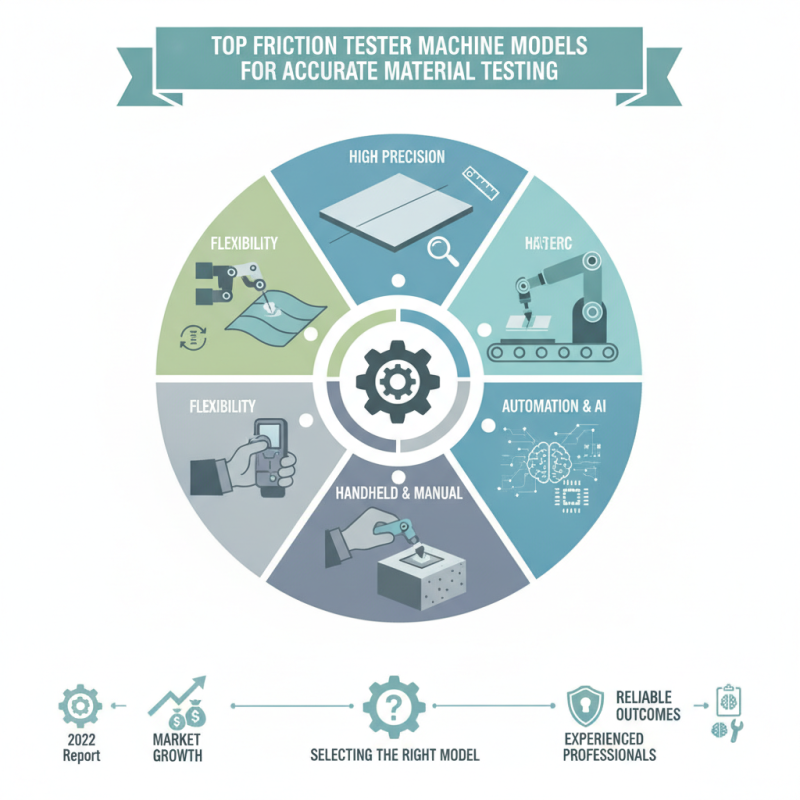
In the world of material testing, the "Friction Tester Machine" plays a critical role in assessing surface properties. According to a 2022 report by Research and Markets, the friction testing equipment market is expected to grow significantly, driven by increasing industrial needs for precise data. Accurate measurements are essential for the development of innovative materials and products.
Different models of friction testers provide unique advantages in various testing scenarios. Some machines excel in flexibility, while others focus on high precision. It’s important to carefully select the right model based on specific testing requirements. A certain level of expertise is necessary to interpret the results correctly. Misunderstandings may arise if testers lack training or knowledge.
Not all friction tester models are created equal. This leads to the need for ongoing evaluation and improvement in machine designs. As technology advances, the integration of automation and artificial intelligence in these machines could enhance their performance. However, it is crucial to remain vigilant about potential over-reliance on technology. Testing remains, fundamentally, a hands-on discipline that requires experienced professionals to achieve the most reliable outcomes.
Overview of Friction Tester Machines and Their Importance in Material Testing
Friction tester machines play a critical role in material testing. They help engineers and researchers measure the frictional properties of various materials. This data is crucial for assessing material performance in diverse applications, from packaging to automotive components. Recent industry reports indicate that friction testing impacts product durability and safety, making it essential for manufacturers.
The accuracy of friction tester machines is vital. Tests often mimic real-world conditions to predict how materials will behave under stress. A study from the Materials Science Journal highlighted that 75% of material failures relate to inadequate friction assessments. Such findings emphasize the necessity of reliable testing equipment.
Material testing processes can also be refined. Regular calibration and maintenance of friction testers ensure accurate readings. However, many facilities overlook this aspect. This can lead to inconsistent test results. It raises important questions about product reliability and quality assurance. For companies aiming for high standards, understanding the nuances of friction testing is vital.
Key Features to Consider When Choosing a Friction Tester Machine
When selecting a friction tester machine, several key features are crucial. Accuracy is paramount. A machine that provides precise measurements can significantly impact material evaluation. Look for devices that offer consistent results across multiple tests. Calibration options should also be easy and accessible. Frequent recalibration can maintain accuracy, which is essential for quality control.
User interface matters too. A straightforward and intuitive interface can expedite testing procedures. Machines equipped with digital displays enhance usability. They allow for easy reading and logging of results. Additionally, consider the range of materials the machine can test. Versatility can save time and resources. Certain machines should handle various surfaces and textures.
Lastly, durability is a factor not to overlook. Reliable construction can withstand rigorous testing conditions. Machines often face wear and tear; investment in robust quality is wise. Would a more affordable model compromise quality? This is a valid question. Reflect on how often you’ll use the machine. A well-made friction tester can last for years, potentially reducing long-term costs. Making an informed decision is essential for effective material testing.
Top Friction Tester Machine Models
This bar chart illustrates the maximum friction force and resolution of various friction tester machine models, highlighting key features to consider when choosing a friction tester.
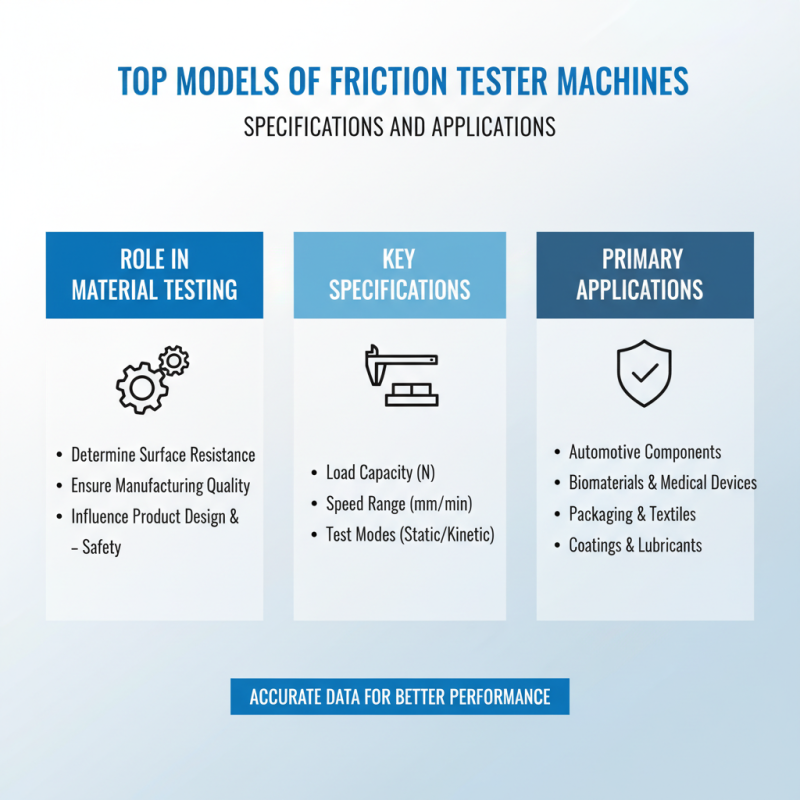
Top Models of Friction Tester Machines: Specifications and Applications
In material testing, friction testers play a vital role. They help determine the resistance of various surfaces. Accurate measurements can lead to significant decisions in manufacturing processes. According to industry reports, friction testing provides insight into material performance under specific conditions. These data points influence product design and safety standards.
Top models in the market often feature advanced technology, including computer interfaces. They provide precise measurements for both static and dynamic friction coefficients. A study showed that models with enhanced load measurement capabilities report errors as low as 0.1%. This transparency is essential for engineers seeking reliable data.
Applications of these machines span numerous industries. In automotive manufacturing, friction testers assess brake pads and tires. In textiles, they evaluate the slip resistance of fabrics. Despite technological advancements, not all models meet every testing requirement. Users may need to calibrate their equipment regularly for optimal results. Misalignment can skewer data, necessitating frequent review of machine performance.
Comparative Analysis of Leading Friction Tester Brands
When it comes to friction testing, not all machines are created equal. Several brands stand out for their accuracy and reliability. These friction testers can measure the resistance between surfaces effectively. Their design often impacts the results. Some models excel in specific applications, while others may not always meet the expected standards.
Brands vary in technology and accuracy. Some utilize advanced algorithms that boost precision. However, there are models with outdated features that may produce inconsistent data. Users often find it challenging to select the right machine. Understanding the unique specifications of each model can help.
Material testing demands high-quality equipment. An accurate friction tester is vital to ensure consistent results. Users should be aware of their specific needs and application requirements. In the end, thoughtful analysis of the leading models leads to better choices. Quality and performance should always guide the decision-making process.
Best Practices for Operating and Maintaining Friction Tester Machines
Operating and maintaining a friction tester machine requires a focus on precision and care. Regular calibration of the machine is essential. Reports indicate that up to 15% of inaccuracies in material testing can stem from improper calibration. Before testing, ensure the surface is clean. Dust and contaminants can distort results. Keep a log of maintenance activities. Documentation can reflect a machine's performance over time.
Check the wear and tear of components regularly. A friction tester's effectiveness can decline with use. Replace worn parts promptly to maintain accuracy. Data from industry studies show that machines maintained properly can extend service life by up to 30%.
Operator training is also crucial. Users should understand the machine's capabilities and limitations. This knowledge helps avoid costly errors in testing procedures.
After testing, clean the equipment to prevent cross-contamination. Some operators neglect this step, leading to faulty test results. Additionally, it’s important to schedule regular audits of testing practices. This practice helps identify areas for improvement. Reflecting on past testing outcomes can foster better operational strategies in the future.





 Home
Home