What is a Crockmeter Rubbing Fastness Tester and How Does It Work?
The textile industry faces increasing demands for quality and durability. Fabric performance, especially color fastness, is crucial for customer satisfaction. A vital testing tool in this process is the Crockmeter Rubbing Fastness Tester. This device evaluates how well fabrics hold their color during friction and wear.
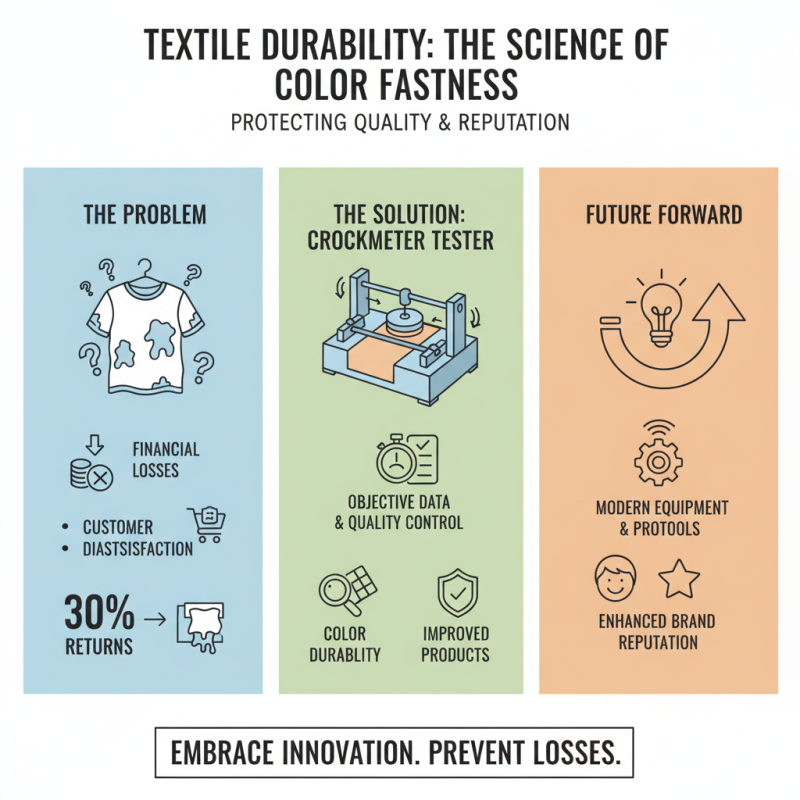
According to industry reports, poor color fastness can lead to significant financial losses. Up to 30% of returns in the apparel sector stem from color bleeding or fading. The Crockmeter Rubbing Fastness Tester provides objective data on color durability. Its results guide manufacturers in improving product quality, ultimately enhancing brand reputation.
Despite its importance, the implementation of this tester is often overlooked. Many companies still rely on outdated testing methods. An accurate assessment requires updating equipment and protocols. Ideally, fabric testing should embrace innovation to prevent customer dissatisfaction and potential financial repercussions.
What is the Crockmeter Rubbing Fastness Tester?
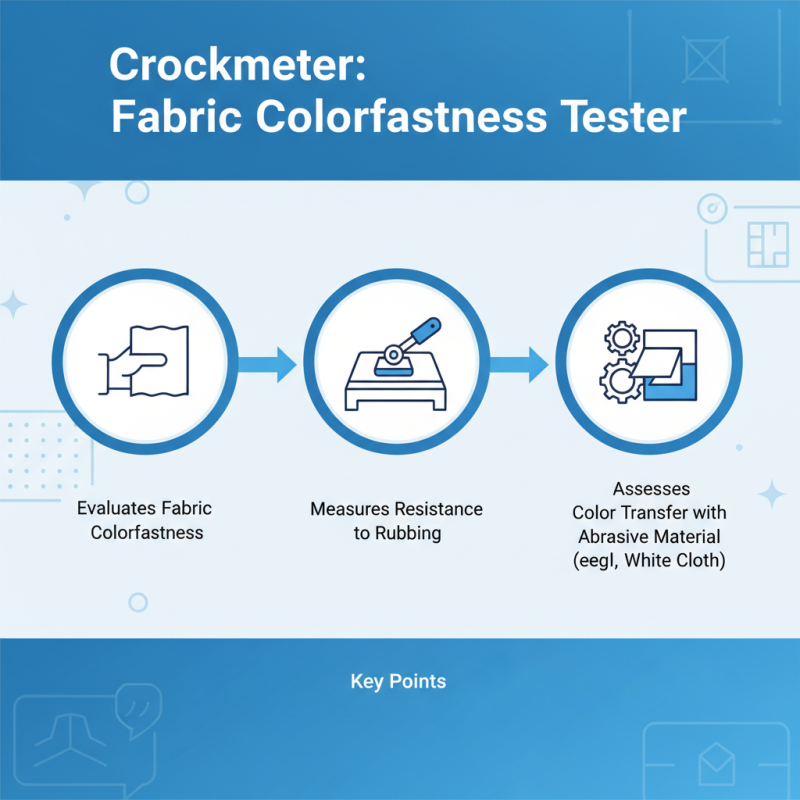
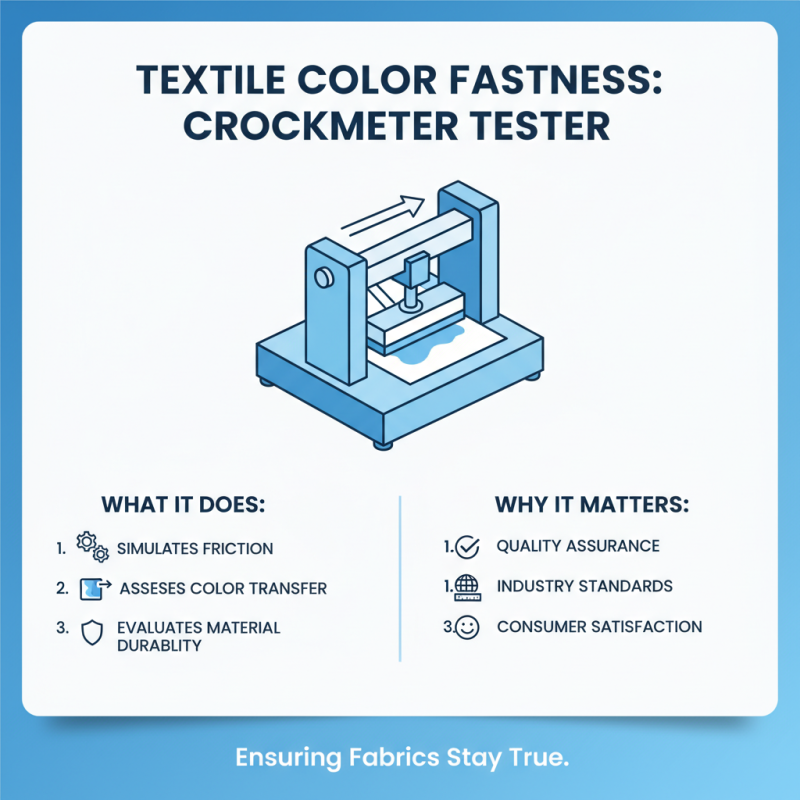
A Crockmeter Rubbing Fastness Tester is an essential tool in textile testing. It measures how well fabric holds color when rubbed against another surface. This is crucial for industries that rely on dye quality and durability, such as fashion and upholstery.
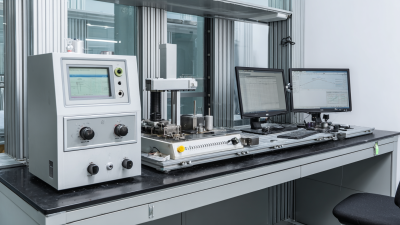
The tester consists of a platform and a rubbing device. The fabric sample is placed on the platform, while the rubbing device moves across it. Operators press a color transfer cloth against the fabric to see if color transfers. This process simulates wear over time. It’s a straightforward but vital test. It provides insights into the longevity of a product's color.
However, achieving accurate results can be tricky. If pressure is inconsistent, it may lead to misleading findings. Moreover, different fabrics react differently. Some might show excessive color transfer. Others may not represent real-world usage. Users often reflect on these challenges to improve processes.
What is a Crockmeter Rubbing Fastness Tester and How Does It Work?
| Feature |
Description |
| Purpose |
To assess the rubbing fastness of fabrics and textiles. |
| Principle |
Simulates wear and friction by rubbing fabrics against a standard white cloth. |
| Standards |
Complies with various international testing standards including ISO and AATCC. |
| Components |
Includes a rubbing machine, standard abrasives, and sample holders. |
| Procedure |
Samples are rubbed 10-100 times under specified loads and conditions. |
| Results |
Results are evaluated based on color transfer to the white cloth. |
| Applications |
Widely used in the textile, apparel, and quality control industries. |
Principles of Operation for Rubbing Fastness Testing
A Crockmeter Rubbing Fastness Tester is essential for evaluating fabric colorfastness. This device measures the resistance of colored textiles to rubbing. The process typically involves using a standard abrasive material, such as a white cloth or paper. When fabrics come into contact, friction occurs, and color transfer is assessed.
The core principle behind rubbing fastness testing is simple. A standardized load, usually around 9 kg, presses the colored fabric against a white test cloth. The movement mimics the action of everyday wear. After the test, color transfer is evaluated using a gray scale to determine the degree of staining. Studies indicate that proper testing can reduce the likelihood of customer complaints by approximately 30%.
Tips: Always calibrate your crockmeter regularly. This ensures accurate and consistent results. Use different types of abrasive materials for varied textile applications. A thorough understanding of test standards is crucial.
Testing outcomes can be disappointing. Some fabrics may show significant color bleeding. This issue highlights the importance of selecting materials wisely. Identifying suitable dyes and techniques can improve overall fastness. Always question the durability of new fabric compositions before mass production.
Key Standards and Specifications for Crockmeters
Crockmeters are essential tools for measuring the rubbing fastness of textiles. They assess how well a fabric retains its color when subjected to friction. The results determine a fabric's durability and are vital for quality control.
Key standards exist for using crockmeters. ISO 105-X12 is widely recognized for evaluating color fastness. A standardized test procedure outlines required materials and conditions. Fabrics must be securely fixed and rubbed with a white cloth. The pressure applied is crucial and must be consistent. The rubbing duration also plays a significant role. Unexpected variations can lead to inconsistent results.
While standards guide the process, it's essential to acknowledge limitations. Not every fabric will respond uniformly. Differences in fiber composition may affect test outcomes. Proper calibration of equipment is critical but not foolproof. Remember, achieving perfection in testing can often be a challenge. Repeated testing may be necessary to confirm results. Understanding these nuances is vital for anyone working with textiles.
Crockmeter Rubbing Fastness Tester - Results of Various Fabrics
Understanding Test Parameters and Results Interpretation
Crockmeter rubbing fastness testers play a crucial role in assessing the color fastness of textiles. They determine how well a material withstands rubbing. This is important for industries where fabric quality matters. The test simulates friction, revealing potential color transfer.
Understanding the test parameters is vital for accurate results. The test typically uses a weighted pad, which rubs against the fabric under controlled conditions. Results are scored on a scale, often from 1 to 5. Low scores indicate poor fastness, while high scores reflect durability.
Interpretation can be tricky. Factors like pressure, speed, and type of fabric influence outcomes. Some fabrics may appear durable but fail under stress. This highlights the need for careful analysis. Results should guide manufacturers in improving product quality. They are essential for meeting consumer expectations and industry standards.
Applications of Crockmeter Testing in Textile Industry
Crockmeter testing plays a vital role in the textile industry. It assesses the rubbing fastness of fabrics. This test helps determine how well a fabric holds color under friction. It's particularly important for items like clothing and upholstery. Color fading can lead to dissatisfaction from customers.
In applications, it helps manufacturers ensure quality. Fabrics that lose color easily can damage their reputation. Different materials respond differently under friction. While cotton may show good fastness, synthetic fabrics may not perform as expected. Testing can reveal these inconsistencies.
However, not all tests yield perfect results. Sometimes, fabrics may pass initial tests but fail in real-world usage. This discrepancy can force manufacturers to rethink their choices. Continuous evaluation is essential for maintaining fabric quality and consumer trust.





 Home
Home