How to Choose the Best Textile Testing Equipment for 2026?
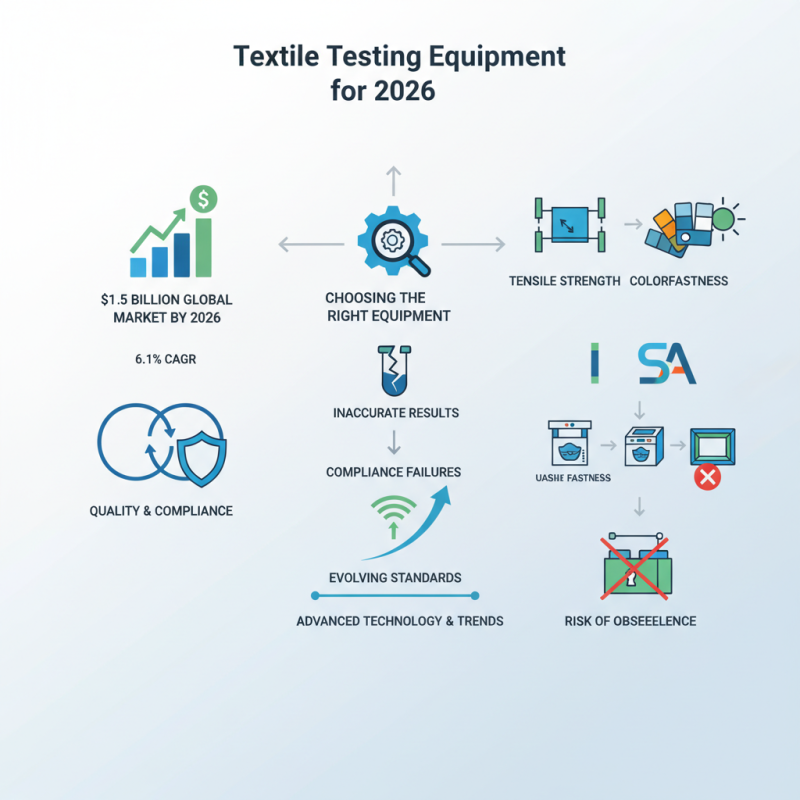
In the ever-evolving textile industry, choosing the right Textile Testing Equipment for 2026 is crucial. Reports indicate that the global textile testing market is projected to reach $1.5 billion by 2026, growing at a CAGR of 6.1%. This surge highlights the importance of reliable equipment in ensuring quality and compliance. Proper testing methods directly impact a company's reputation and profitability.
Selecting the best equipment requires understanding specific testing types, such as tensile strength and colorfastness. Brands like Instron and SDL Atlas offer diverse options tailored to different needs. However, not every device ensures accuracy, leading to potential discrepancies in results. Research suggests that improper testing can result in compliance failures, affecting market competitiveness.
Furthermore, industry standards evolve rapidly, requiring regular equipment updates. Companies must not only invest in advanced technology but also stay informed about emerging trends. Relying solely on past equipment choices may risk obsolescence. Reflecting on these aspects will equip businesses to make informed decisions about their textile testing needs.
Understanding the Importance of Textile Testing Equipment for 2026
Textile testing equipment plays a crucial role in the industry. With the global textile market projected to reach $1.23 trillion by 2026, the significance of reliable testing cannot be overstated. Accurate testing ensures that fabrics meet safety, durability, and comfort standards. It reduces waste and enhances product quality. Companies need to invest in high-quality testing equipment to stay competitive.
Recent reports indicate that improper textile testing can lead to significant financial losses. About 30% of apparel manufacturers faced returns due to quality control issues in 2023. Consumers demand high-quality products. Testing equipment must evolve to meet these needs. For instance, automated testing systems provide faster results and greater accuracy. This has become a necessity rather than an option.
However, selecting the right equipment can be challenging. Many organizations still rely on outdated methods. This often results in inconsistent data and unreliable outcomes. As the industry advances, investing in advanced testing technologies is vital. Future testing equipment must not only provide accuracy but also integrate sustainability measures. The landscape will continue to shift. Companies must adapt or risk falling behind.
How to Choose the Best Textile Testing Equipment for 2026?
| Testing Method |
Purpose |
Key Features |
Average Cost ($) |
Recommended Frequency of Use |
| Tensile Testing |
Measure the force required to stretch or break textile materials |
Digital display, high precision sensors, automatic calculations |
2,000 - 10,000 |
Monthly |
| Colorfastness Testing |
Evaluate how well a fabric maintains its color after washing |
Multiple wash cycles, color grading system |
1,500 - 6,000 |
Weekly |
| Shrinkage Testing |
Determine the dimensional stability of textiles after washing |
Precision measuring tools, pre-set washing conditions |
1,200 - 5,000 |
Bi-weekly |
| Flammability Testing |
Assess how quickly and intensely a fabric burns |
Safety protocols, automated flame application |
3,000 - 15,000 |
Quarterly |
| Moisture Management Testing |
Evaluate a fabric's ability to wick away moisture |
Capacitance measurement, moisture regain calculation |
800 - 4,000 |
Monthly |
Key Factors to Consider When Choosing Textile Testing Equipment
When selecting textile testing equipment in 2026, factors like accuracy, ease of use, and technology integration are crucial. Reliable equipment ensures accurate measurement of properties like strength, colorfastness, and durability. Modern machines often feature user-friendly interfaces, making training easier for technicians.
**Tips:** Choose models that allow flexibility in testing parameters. This adaptability can meet various testing needs over time.
Consider the support services provided by manufacturers. Technical support and maintenance can prevent long downtimes. Check if the equipment can integrate with existing systems. This connectivity helps streamline operations.
**Tips:** Look for equipment with proven track records. Research user reviews to gauge performance. In addition, plan for future upgrades, ensuring longevity in your equipment investment. Remember, investing in quality testing equipment pays off in the long run.
Textile Testing Equipment Features Comparison 2026
Types of Textile Testing Equipment and Their Applications
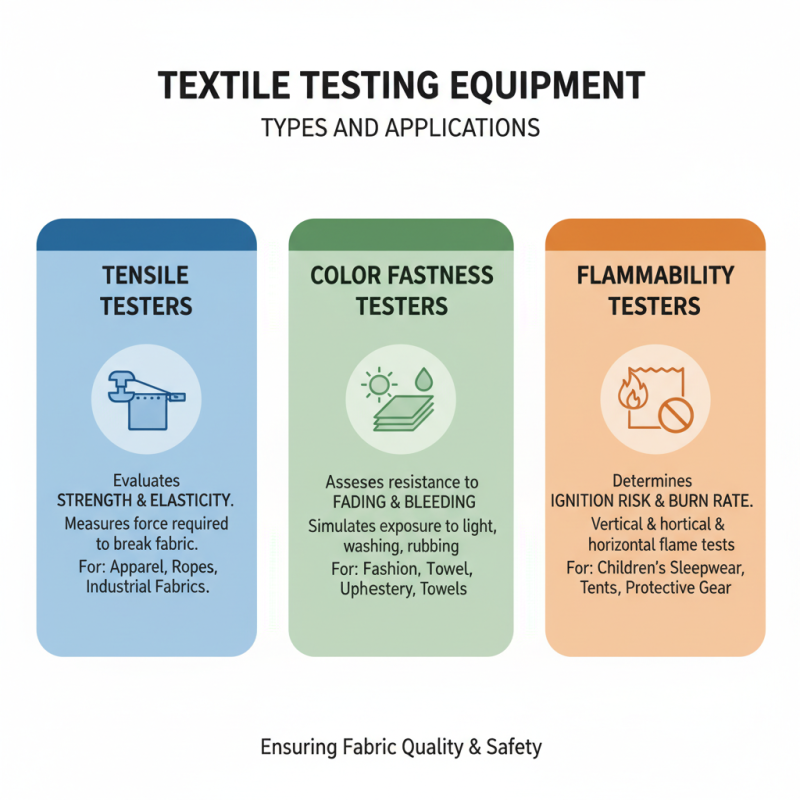
When selecting textile testing equipment, it’s crucial to understand the various types and their specific applications. Fundamental types include tensile testers, color fastness testers, and flammability testers. Each device serves a unique purpose in evaluating fabric properties, ensuring safety and quality.
Tensile testers assess the strength and elasticity of fabrics. This equipment measures how much force a material can withstand before breaking. Understanding these properties is vital for manufacturers. Color fastness testers evaluate how well a fabric holds color when exposed to washing, light, or rubbing. This ensures that garments maintain their aesthetic appeal over time.
Flammability testers focus on how quickly a fabric ignites and how it burns. This testing is essential for ensuring compliance with safety standards. Choose equipment that meets industry regulations and aligns with your production needs.
Tips: Look for equipment with a user-friendly interface. Ensure accuracy is regularly calibrated. Seek advice from professionals in the industry. Investing in reliable equipment can significantly impact product quality and consumer satisfaction. Remember, while advanced testing methods are helpful, traditional methods still hold value.
Evaluating the Latest Technology Trends in Textile Testing
Choosing the right textile testing equipment requires an understanding of current technology trends. In 2026, digital transformation plays a central role. Advanced sensors and automation are becoming standard. They enhance accuracy and efficiency in testing procedures. Manufacturers are shifting towards smart equipment that collects and analyzes data in real-time.
Wireless connectivity is another vital trend. It allows for seamless data transfer and remote monitoring. This accessibility can speed up decision-making processes significantly. However, integrating these technologies can be challenging. Users often face learning curves related to new systems and software. Continuous training programs will be crucial to maximize the benefits of these advancements.
Sustainability is also a key consideration. Eco-friendly materials and energy-efficient testing equipment are gaining traction. While many organizations strive to adopt these solutions, some still grapple with higher initial costs. Finding a balance between innovation and budget constraints remains a common dilemma. Keeping an eye on emerging technologies will be essential for manufacturers aiming to stay competitive in this evolving landscape.
Budget Considerations and Return on Investment for Testing Equipment
When choosing textile testing equipment, budget considerations are critical. Investing in high-quality equipment can seem daunting. However, it's essential to analyze potential returns on investment. Understanding the long-term benefits will help in making informed decisions. Robust equipment tends to provide more accurate measurements and reliable results. This reliability can lead to fewer re-tests and reduced waste.
Determine the costs associated with maintenance and training. Specialized equipment often requires expert knowledge, which can add to initial expenses. Keep in mind that while lower-priced options may save money upfront, they can prove costly over time. A detailed cost analysis, including labor and production efficiency, will highlight potential gains.
Evaluate how testing equipment impacts overall production quality. Improved testing processes can lead to better end-products, enhancing customer satisfaction. Consider the scalability of the equipment; it should meet current needs and adapt to future demands. Balancing immediate costs with potential long-term gains is key to a wise investment in textile testing.





 Home
Home