Home
China Top 10 Textile Testing Machine Suppliers? This question matters as textile production becomes more technical, regulated, and sustainability-focused. Textile Exchange’s Materials Market Report 2024 recorded global fiber production at approximately 124 million tonnes in 2023. Polyester represented about 57% of total output. Each kilometer of fabric therefore creates pressure for accurate strength, abrasion, colorfastness, and dimensional testing.
Testing is not only a laboratory formality. A tensile tester can reveal weak seams before fabric reaches a cutting table. An abrasion tester can expose surface failure after repeated contact. Reliable suppliers should provide calibrated Textile Testing Machine systems, clear software, operator training, and responsive technical support. Their equipment should also support recognized methods, including ISO 13934-1, ISO 12947, ASTM D5034, and related standards. Standards matter.
This overview identifies ten notable Chinese suppliers through practical criteria. These include product range, manufacturing experience, export capability, certification evidence, application support, and customer feedback. Industry context comes from ITMF surveys, Textile Exchange reports, WTO trade data, and published international testing standards. However, no ranking is perfect. Supplier information can be self-reported, and product quality may differ between models. Buyers should request calibration records, sample-testing results, factory references, and after-sales terms. A polished brochure proves little. A repeatable test does. Some smaller manufacturers may also deserve stronger recognition, but they often publish limited technical evidence. That gap requires careful verification rather than quick conclusions.
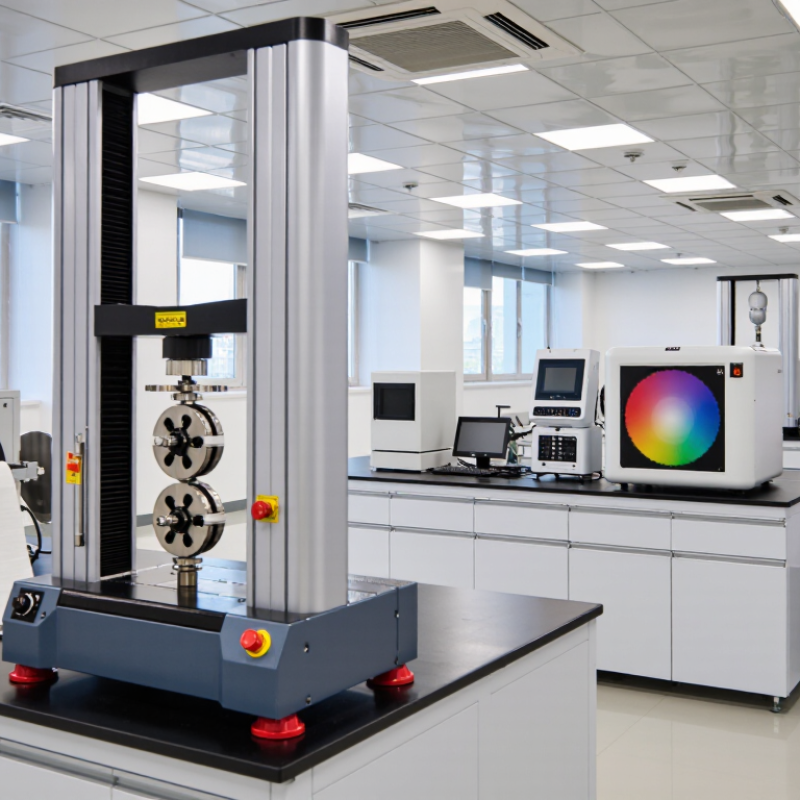
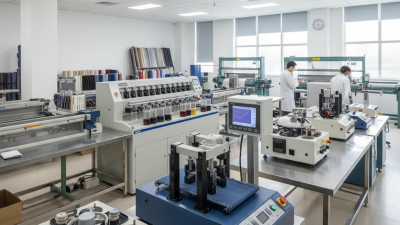
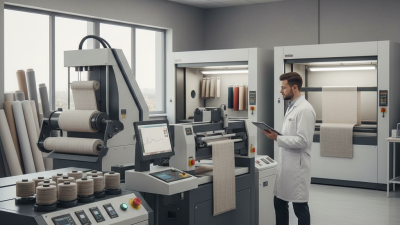
Textile testing machines are controlled instruments used to measure fabric performance. They examine strength, stretch, abrasion resistance, colorfastness, pilling, moisture movement, and dimensional stability. A tensile tester, for example, records the force needed to break a yarn or fabric strip. It turns visible damage into measurable data.
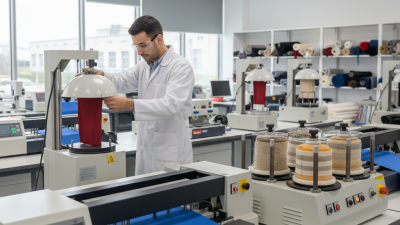
These machines support product development and quality control. In a laboratory, technicians may test a washed fabric sample, inspect seam failure, and compare results against a defined textile standard. The findings help manufacturers adjust fiber blends, weaving density, dyeing conditions, or finishing treatments. Small errors matter. Incorrect specimen size or uneven clamping can distort results.
When evaluating suppliers in China, buyers should examine calibration records, reference standards, software traceability, and after-sales training. Reliable equipment should provide repeatable readings across different operators. Safety guards, stable fixtures, and clear operating instructions also matter. A low purchase price can become expensive when spare parts are unavailable or technical support is slow.
No test is perfect. Humidity, operator technique, and sample preparation can influence the outcome. This is why experienced laboratories control temperature, condition samples, and repeat unusual results. Suppliers with documented quality procedures and responsive service are more valuable than suppliers offering impressive specifications alone. The best machine fits the material, test method, and daily workload.
China Top 10 Textile Testing Machine Suppliers?
Key Criteria for Evaluating Chinese Textile Testing Machine Suppliers
Choosing among China’s top textile testing machine suppliers requires more than comparing prices. Start with the test method, not the sales brochure. Check whether the equipment supports relevant ISO or ASTM procedures for tensile strength, abrasion, colorfastness, or fabric bursting tests. Ask for calibration records with traceable references. A missing certificate can create costly doubts during audits.
Practical experience matters. Request a live demonstration using your actual fabric, yarn, or finished garment samples. Observe clamping stability, sensor response, software controls, and result repeatability. A reliable supplier should explain uncertainty, maintenance intervals, and common operator mistakes clearly. Test reports should show units, speed, specimen size, and environmental conditions.
Inspect the production site when possible. Review machining quality, electrical safety, spare-part availability, and final inspection records. Confirm installation training, response times, warranty coverage, and remote support before signing. Ask for references from laboratories with similar workloads. A low price looks attractive. It may hide weak software or delayed parts. No supplier is perfect, and even a strong factory can miss a delivery target. That is why sample testing, written specifications, and staged acceptance remain essential. Keep every promise documented.
This neutral 100-point procurement scorecard emphasizes compliance, measurement reliability, lifecycle support, and commercial practicality when comparing textile testing machine suppliers.
How to use it: Score each supplier from 0 to 10 against every criterion, multiply by the corresponding weight, and compare the final weighted results.
China’s Top 10 Textile Testing Machine Suppliers are often evaluated through technical evidence, not attractive catalogs. The strongest suppliers usually provide tensile testers, bursting testers, pilling testers, abrasion testers, and colorfastness equipment. Some focus on fabric laboratories, while others support garment factories and research centers. Their machines commonly reference ISO, ASTM, GB, and related testing methods. Still, standards alone do not guarantee dependable results.
A practical top-ten shortlist should include suppliers with stable calibration systems, clear software records, and trained technical teams. Look for suppliers offering fabric thickness, shrinkage, moisture, air permeability, and seam performance instruments. Reliable companies explain test conditions before quoting equipment. They also provide installation guidance, spare parts, and verification documents. Small details matter. A loose clamp can distort tensile results. Poor humidity control can change fabric behavior.
No ranking is flawless. Price comparisons may ignore calibration costs, training time, or delayed replacement parts. Some suppliers respond quickly before payment, then communicate slowly afterward. That risk deserves attention. Buyers should request sample reports, factory inspection evidence, and after-sales response times. A trial test with the same fabric can reveal repeatability problems. My experience suggests that the cheapest machine is rarely the lowest-cost choice. However, even an expensive instrument can disappoint without proper maintenance, operator training, and periodic verification.
| Rank | Anonymous Supplier Profile | Primary Equipment Focus | Common Test Standards | Typical Measuring Capability | Control and Data Features | Suitable Buyer |
|---|---|---|---|---|---|---|
| 1 | Supplier Profile 01 | Universal tensile and elongation testers | ISO 13934-1, ISO 13934-2, ASTM D5034, ASTM D5035 | Typical force ranges from 1 kN to 10 kN, depending on configuration | Digital force and displacement recording; programmable test speed; exportable reports | Textile mills, inspection laboratories, and garment manufacturers |
| 2 | Supplier Profile 02 | Martindale abrasion and pilling testers | ISO 12947, ISO 12945-2, ASTM D4966, ASTM D4970 | Multi-station testing; programmable cycles commonly reaching 100,000 or more | Automatic cycle counting; preset pressure options; visual grading support | Upholstery, workwear, home-textile, and fabric-testing laboratories |
| 3 | Supplier Profile 03 | Color fastness and washing fastness equipment | ISO 105 series, AATCC TM61, AATCC TM8 | Controlled washing, agitation, temperature, and drying conditions | Digital temperature control; programmable time settings; corrosion-resistant test vessels | Dye houses, apparel exporters, and chemical-testing laboratories |
| 4 | Supplier Profile 04 | Fabric bursting strength testers | ISO 13938-1, ISO 13938-2, ASTM D3786 | Interchangeable diaphragms and test areas for knitted and woven fabrics | Hydraulic or pneumatic operation; pressure and burst-time display; automatic peak capture | Knitted-fabric producers, quality-control departments, and third-party labs |
| 5 | Supplier Profile 05 | Air permeability and water-vapor testing systems | ISO 9237, ASTM D737, ASTM E96 | Selectable test heads and flow ranges for lightweight to heavy fabrics | Differential-pressure measurement; automatic flow adjustment; digital results storage | Sportswear, medical textiles, filtration fabrics, and outdoor-material producers |
| 6 | Supplier Profile 06 | Fabric dimensional-change and shrinkage testers | ISO 5077, ISO 6330, AATCC TM135 | Supports length and width change evaluation after washing or drying | Wash-program control; drying-cycle selection; dimensional-change calculation | Apparel factories, laundry laboratories, and fabric finishing plants |
| 7 | Supplier Profile 07 | Fabric thickness, mass, and density measurement equipment | ISO 5084, ISO 3801, ASTM D1777, ASTM D3776 | Micrometer pressure and weighing configurations for a broad range of textiles | Constant-pressure foot; calibrated balance interface; digital thickness resolution | Raw-material inspection, product development, and production laboratories |
| 8 | Supplier Profile 08 | Flammability and vertical burning testers | ISO 6940, ISO 6941, ASTM D6413, 16 CFR Part 1610 | Measures ignition, flame spread, afterflame, and afterglow behavior | Controlled flame height; safety enclosure; automated timing and data recording | Protective clothing, children’s apparel, furnishings, and compliance laboratories |
| 9 | Supplier Profile 09 | Yarn, seam, zipper, and button strength testers | ISO 2062, ASTM D2256, ASTM D1683, ASTM D4846 | Interchangeable grips and fixtures for yarn, seams, fasteners, and narrow fabrics | Constant-rate-of-extension control; peak-force detection; statistical reporting | Sewing factories, trim suppliers, denim producers, and apparel laboratories |
| 10 | Supplier Profile 10 | Environmental chambers and accelerated weathering testers | ISO 4892, ASTM G154, ISO 105-B02 | Controlled exposure to temperature, humidity, ultraviolet radiation, and moisture | Programmable cycles; temperature and humidity monitoring; exposure-time logging | Outdoor textiles, automotive fabrics, coated materials, and research laboratories |
Note: The profiles are anonymized and organized by commonly supplied textile-testing equipment categories. Actual specifications, available standards, calibration status, and configuration should be confirmed directly with each supplier before purchase.
China Top 10 Textile Testing Machine Suppliers: Machine Types, Testing Standards, and Industry Applications
China’s leading textile testing machine suppliers usually cover tensile, bursting, abrasion, pilling, colorfastness, shrinkage, and fabric air-permeability equipment. A practical supplier review should examine calibration records, software traceability, spare-part access, and operator training. The machine must match the test method, not merely the product brochure. ISO 13934-1 supports strip tensile testing, while ISO 12947 evaluates fabric abrasion resistance. ASTM D5034 remains widely used for breaking strength assessment.
Testing standards shape purchasing decisions. Apparel laboratories often need crocking and perspiration tests under ISO 105 methods. Upholstery producers may prioritize abrasion cycles, seam strength, and flammability testing. Medical textile manufacturers require tighter control of tensile performance, liquid penetration, and dimensional stability. Textile Exchange’s Materials Market Report 2024 estimated global fiber production reached about 124 million tonnes in 2023. It could exceed 160 million tonnes by 2030. More material volume means more pressure for repeatable testing.
Industry reports provide direction, but factory conditions remain decisive. A humid room can change fabric strength results. Poor specimen cutting can distort comparisons. Small details matter. A supplier should demonstrate repeatability using your actual fabric, not only standard swatches. No ranking is perfect. “Top 10” lists can overvalue sales reach and undervalue calibration service. Buyers should compare uncertainty data, maintenance response time, and compliance documentation before selecting equipment for export, domestic production, or research applications.
Choosing among China’s top textile testing machine suppliers requires more than comparing prices. Start with your test method, sample type, and production risks. Textile Exchange’s Materials Market Report 2024 recorded global fiber production at 124 million tonnes in 2023. It projects approximately 160 million tonnes by 2030. That growth increases pressure for accurate strength, abrasion, colorfastness, and dimensional stability testing.
Define the required standards before contacting suppliers. Check compatibility with ISO, ASTM, or AATCC methods. Request calibration records, measurement uncertainty data, and traceable reference materials. A supplier operating with ISO/IEC 17025-accredited calibration partners offers stronger evidence of reliability. Ask for raw-data export, software language options, preventive maintenance plans, and response times. Details matter.
Test the supplier, too. Request a live demonstration using your actual fabric, yarn, or finished garment. Compare repeatability across several runs, not one impressive result. Review installation records from similar factories, while protecting client confidentiality. A low quotation can still become expensive when sensors drift or software fails. I have seen buyers overlook humidity control, then question inconsistent tensile results later. That mistake is avoidable, but not rare.
The ITMF International Textile Machinery Shipment Statistics 2024 also reflects continued investment across textile manufacturing, although market conditions remain uneven. Therefore, evaluate local technical support, spare-part availability, training quality, and total ownership cost. A careful supplier should explain limitations clearly. Overconfident promises deserve a second look.